When considering premium 8K Neo QLED TVs, the Samsung QN900F (2025) and Samsung QN900D (2024) stand as two strong options worth comparing. The QN900F steps in as Samsung’s newest 8K model positioned just below the flagship QN990F, while the QN900D remains a highly capable previous-year alternative with similar core performance.
Both TVs offer 8K resolution, Quantum Mini LED backlighting, AI-driven processing, and Tizen Smart OS, but the QN900F introduces specific improvements that matter most in bright living environments. This comparison focuses on those real-world enhancements.
Samsung QN900F (2025) Short Overview
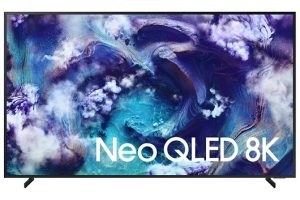
The Samsung QN900F is designed for homes with mixed or bright lighting. Its standout upgrade is the matte “Glare-Free” anti-reflection screen, which significantly reduces reflections from windows and lamps, making picture clarity better during daytime viewing.
HDR brightness is also improved. With roughly ~1700 cd/m² peak brightness in lab testing, highlights appear more vibrant and impactful in HDR scenes. Color reproduction is strong as well, with excellent HDR color accuracy and volume thanks to Samsung’s Quantum Dot technology.
Connectivity includes four HDMI 2.1 ports, making it suitable for modern gaming consoles and high-bandwidth video sources. Overall, QN900F aims to deliver a more versatile and premium 8K experience for everyday living spaces.
| Samsung QN900F Prices | |
| 85-inch (QN85QN900FFXZA) | Check Today’s Price (Amazon.com)… |
| 75-inch (QN75QN900FFXZA) | Check Today’s Price (Amazon.com)… |
| 65-inch (QN65QN900FFXZA) | Check Today’s Price (Amazon.com)… |
Samsung QN900D (2024) Short Overview
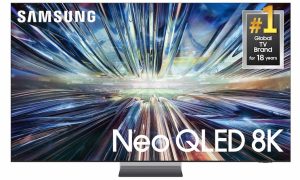
The Samsung QN900D continues to perform extremely well as a premium 8K Neo QLED model. Its glossy finish helps achieve slightly deeper blacks in darker rooms — a benefit for cinematic movie watching. However, this same finish may reflect more light in a bright room setup.
Peak HDR brightness remains strong but slightly lower than QN900F, landing closer to ~1400 cd/m² in similar testing categories. Color volume is excellent and very close to QN900F, making it a strong performer for HDR content.
QN900D’s premium design includes Samsung’s One Connect Box, which consolidates ports into a separate hub for cleaner installation — especially useful when wall-mounting.
| Samsung QN900D Prices | |
| 85-inch (QN85QN900DFXZA) | Check Today’s Price (Amazon.com)… |
| 75-inch (QN75QN900DFXZA) | Check Today’s Price (Amazon.com)… |
| 65-inch (QN65QN900DFXZA) | Check Today’s Price (Amazon.com)… |
Samsung QN900F vs QN900D — Specs Comparison Table
Here’s how both models stack up in terms of key features and performance:
| Feature / Spec | Samsung QN900F (2025) | Samsung QN900D (2024) | ||||||
| Panel / Backlight | Quantum Mini LED Neo QLED | Quantum Mini LED Neo QLED | ||||||
| Positioning | 2025 refreshed high-end 8K | 2024 premium 8K flagship | ||||||
| Screen Coating | Matte “Glare-Free” anti-reflection | Glossy standard finish | ||||||
| HDR Peak Brightness (10% Window) | ~1700 cd/m² (strong highlight pop) | ~1400 cd/m² (still bright but less impactful) | ||||||
| Color Volume BT.2020 Coverage (ITP) | 43.5% | 42.9% | ||||||
| Resolution | 8K UHD | 8K UHD | ||||||
| Smart OS | Tizen Smart TV | Tizen Smart TV | ||||||
| HDMI Ports | 4× HDMI 2.1 | 4× HDMI 2.1 (via One Connect Box) | ||||||
| Best Use Case | Bright / mixed-light environments | Dark / home-theater environments | ||||||
|
|
The Differences Between Samsung QN900F and QN900D
While both TVs share many core features, three main differences determine which one performs better in your setup:
- Screen Coating & Reflection Handling
- QN900F uses a matte Glare-Free screen, drastically reducing reflections from windows and indoor lighting.
- QN900D uses a glossier finish, which enhances contrast in dark rooms but can introduce glare and mirror-like reflections in bright environments.
This is the biggest real-world difference between the two — it impacts daily viewing far more than small spec variations.
- HDR Peak Brightness
- QN900F achieves ~1700-nit HDR highlights → brighter, more impactful visual punch.
- QN900D reaches closer to ~1400 nits → very good, but slightly less pop in HDR movies and games.
This higher brightness benefits both daylight viewing and demanding HDR content.
- Color Volume
- QN900F: 43.5% BT.2020 Coverage ITP
- QN900D: 42.9% BT.2020 Coverage ITP
The difference is small, but QN900F can maintain more saturated colors at higher brightness, contributing to richer HDR scenes.
Should You Choose Samsung QN900F?
If you need an 8K TV that performs excellently in brighter rooms, offers better anti-glare handling, and provides more dynamic HDR brightness and color, then Samsung QN900F is the better choice. It offers practical improvements you’ll notice day-to-day, especially in well-lit living spaces or mixed lighting conditions.
| Samsung QN900F Prices | |
| 85-inch (QN85QN900FFXZA) | Check Today’s Price (Amazon.com)… |
| 75-inch (QN75QN900FFXZA) | Check Today’s Price (Amazon.com)… |
| 65-inch (QN65QN900FFXZA) | Check Today’s Price (Amazon.com)… |
However, if you typically watch in a dark or dedicated home-theater environment, the Samsung QN900D remains highly competitive — and its glossy screen may even provide slightly richer perceived contrast in dim settings. Since pricing can be similar, QN900D continues to be a smart pick depending on your room and viewing style.
| Samsung QN900D Prices | |
| 85-inch (QN85QN900DFXZA) | Check Today’s Price (Amazon.com)… |
| 75-inch (QN75QN900DFXZA) | Check Today’s Price (Amazon.com)… |
| 65-inch (QN65QN900DFXZA) | Check Today’s Price (Amazon.com)… |