The TCL QM7L and TCL QM8K are two Mini-LED TVs designed to deliver excellent picture quality, impressive HDR brightness, and advanced gaming features. However, they belong to different generations of TCL’s television lineup. The TCL QM7L is a 2026 model positioned below the QM8L, while the TCL QM8K is a 2025 model positioned above the QM7K. Although both TVs offer premium display technologies, the QM8K belongs to a higher product tier, while the QM7L benefits from newer-generation SQD Mini-LED technology.
At first glance, the two models share several important features, including 4K resolution, a native 144Hz refresh rate, Mini-LED backlighting, Quantum Dot color, HDMI 2.1 gaming support, and Google TV. However, the QM8K has an advantage in advertised peak brightness and local dimming capabilities, while the newer QM7L introduces TCL’s Super Quantum Dot technology, an improved backlight control system, and a newer picture processor. Let’s take a closer look at their specifications and differences to determine which one is the better choice.
TCL QM7L (2026) Short Overview
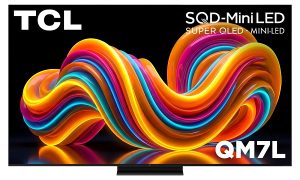
The TCL QM7L is a 2026 mid-range Mini-LED television positioned below the QM8L in TCL’s lineup. It replaces the previous-generation QM7K and introduces several improvements in color reproduction, backlight control, and picture processing.
One of its biggest upgrades is the use of Super Quantum Dot (SQD) Mini-LED technology, combined with TCL’s Deep Color System. This technology is designed to deliver richer and more accurate colors, with an advertised 100% BT.2020 color gamut. The television also incorporates an advanced Mini-LED backlighting system with up to 2,100+ local dimming zones, depending on screen size.
In terms of brightness, the TCL QM7L is advertised with up to 3,000 nits of peak brightness. This allows it to deliver impressive HDR highlights and provides sufficient brightness for most viewing environments. Its Enhanced Halo Control System also incorporates a 26-bit backlight controller to improve local dimming precision and reduce blooming around bright objects.
The QM7L uses an HVA 2.0 Pro panel and TCL’s TSR AI Processor, which is designed to improve image clarity, color reproduction, motion handling, and upscaling. These technologies help deliver a more refined viewing experience when watching movies, sports, and other content.
For gaming, the TCL QM7L supports a native 144Hz refresh rate, VRR, ALLM, AMD FreeSync Premium Pro, and Game Accelerator 288. It supports 4K gaming at up to 144Hz and can reach up to 288Hz at 1080p through its Game Accelerator feature.
The QM7L also supports Dolby Vision IQ, HDR10, HDR10+, and HLG. It runs Google TV 14 with Google Gemini integration and features an Audio by Bang & Olufsen sound system with Dolby Atmos support.
The TCL QM7L is available in 55-, 65-, 75-, 85-, and 98-inch screen sizes, making it a versatile option for buyers looking for a modern Mini-LED TV with advanced gaming capabilities and vibrant colors.
| TCL QM7L Prices | |
| 98-inch (98QM7L) | Check Today’s Price (Amazon.com)… |
| 85-inch (85QM7L) | Check Today’s Price (Amazon.com)… |
| 75-inch (75QM7L) | Check Today’s Price (Amazon.com)… |
| 65-inch (65QM7L) | Check Today’s Price (Amazon.com)… |
| 55-inch (55QM7L) | Check Today’s Price (Amazon.com)… |
TCL QM8K (2025) Short Overview
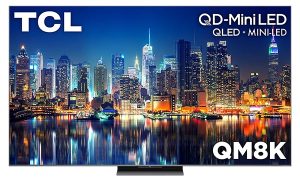
The TCL QM8K was introduced as part of TCL’s 2025 television lineup and sits above the QM7K in the company’s Mini-LED range. It is a higher-tier model designed to deliver more advanced picture quality, stronger HDR performance, and better local dimming capabilities than TCL’s mid-range televisions.
The QM8K combines QD-Mini LED backlighting with TCL’s CrystGlow WHVA panel technology and ZeroBorder design. Its panel is designed to improve viewing angles while maintaining the strong contrast associated with VA-type LCD panels. However, viewing angles remain limited compared with OLED displays, so some loss of brightness and color saturation may occur when watching from far off-center positions.
One of the biggest advantages of the QM8K is its brightness performance. TCL advertises up to 5,000 nits of peak brightness, which is considerably higher than the QM7L’s 3,000-nit rating. This gives the QM8K an advantage when displaying HDR highlights, particularly in movies and television shows with bright highlights against darker backgrounds.
The QM8K also features TCL’s Precise Dimming technology with up to 3,800 local dimming zones, depending on screen size. Combined with its Mini-LED backlighting and Halo Control System, this allows the television to produce deeper-looking blacks, brighter highlights, and better control over blooming.
For gaming, the TCL QM8K offers a native 144Hz refresh rate, VRR, ALLM, and AMD FreeSync Premium Pro. It supports 4K gaming at up to 144Hz and can reach up to 288Hz at 1080p. It also includes four HDMI inputs, with two supporting full HDMI 2.1 bandwidth for high-refresh-rate gaming.
The QM8K supports Dolby Vision IQ, HDR10, HDR10+, and HLG, providing compatibility with major HDR formats. It uses TCL’s AiPQ Pro processor and runs Google TV 12, giving users access to popular streaming applications and Google Assistant features.
Another advantage is its built-in Audio by Bang & Olufsen system, which is designed to provide a refined sound experience. It also supports Dolby Atmos and DTS:X formats.
The TCL QM8K is available in 65-, 75-, 85-, and 98-inch screen sizes. With its higher advertised brightness, advanced local dimming, and premium panel technology, it remains an attractive choice for buyers who prioritize picture quality and HDR performance.
| TCL QM8K Prices | |
| 98-inch (98QM8K) | Check Today’s Price (Amazon.com)… |
| 85-inch (85QM8K) | Check Today’s Price (Amazon.com)… |
| 75-inch (75QM8K) | Check Today’s Price (Amazon.com)… |
| 65-inch (65QM8K) | Check Today’s Price (Amazon.com)… |
TCL QM7L vs QM8K Specifications
Here’s a quick look at how these two TCL Mini-LED TVs compare:
| Feature | TCL QM7L (2026) | TCL QM8K (2025) | |||||||||
| Release Year | 2026 | 2025 | |||||||||
| Available Sizes | 55″, 65″, 75″, 85″, 98″ | 65″, 75″, 85″, 98″ | |||||||||
| Display Technology | SQD Mini-LED | QD Mini-LED | |||||||||
| Resolution | 4K UHD (3840 × 2160) | 4K UHD (3840 × 2160) | |||||||||
| Panel Type | HVA 2.0 Pro | CrystGlow WHVA | |||||||||
| Native Refresh Rate | 144Hz | 144Hz | |||||||||
| Peak Brightness | Up to 3,000 nits | Up to 5,000 nits | |||||||||
| Local Dimming | Up to 2,100+ zones (size-dependent) | Up to 3,800 zones (size-dependent) | |||||||||
| Backlight Control | 26-bit Enhanced Halo Control | TCL Halo Control | |||||||||
| Color Technology | Super Quantum Dot | Quantum Dot | |||||||||
| Color Gamut | 100% BT.2020 (advertised) | Wide Color Gamut | |||||||||
| Picture Processor | TSR AI Processor | AiPQ Pro | |||||||||
| HDR Support | Dolby Vision IQ, HDR10, HDR10+, HLG | Dolby Vision IQ, HDR10, HDR10+, HLG | |||||||||
| IMAX Enhanced | Yes | Yes | |||||||||
| Gaming | VRR, ALLM, FreeSync Premium Pro | VRR, ALLM, FreeSync Premium Pro | |||||||||
| Maximum 4K Refresh Rate | 144Hz | 144Hz | |||||||||
| Maximum 1080p Refresh Rate | 288Hz | 288Hz | |||||||||
| HDMI Connectivity |
4 HDMI inputs (2 × 4K@144Hz, 2 × 4K@60Hz; HDMI 4 with eARC) |
4 HDMI inputs (2 full-bandwidth HDMI 2.1 ports; HDMI 4 with eARC) | |||||||||
| Smart Platform | Google TV 14 | Google TV 12 | |||||||||
| Voice Assistant | Google Gemini / Google Assistant | Google Assistant | |||||||||
| Audio System | Bang & Olufsen | Bang & Olufsen | |||||||||
| Dolby Atmos | Yes | Yes | |||||||||
| DTS Audio | DTS:X | DTS:X | |||||||||
| Price |
|
|
Note: Peak brightness and local dimming figures represent TCL’s advertised series maximums and can vary depending on screen size. Actual brightness performance also depends on picture mode, HDR content, and testing conditions.
The Differences Between TCL QM7L and QM8K
Although the TCL QM7L and QM8K share many core specifications, there are several important differences that can influence your purchasing decision.
1. SQD Mini-LED vs QD Mini-LED
One of the most notable differences between these two televisions is their color technology.
The TCL QM7L uses the newer Super Quantum Dot (SQD) Mini-LED technology, which combines Mini-LED backlighting with TCL’s Deep Color System. It is designed to improve color purity and deliver more vivid colors, with an advertised 100% BT.2020 color gamut.
On the other hand, the QM8K uses conventional QD Mini-LED technology. Although it does not feature TCL’s newer SQD color system, its Quantum Dot technology still provides a wide color gamut and impressive color reproduction.
The QM7L therefore has an advantage in terms of newer color technology and advertised color coverage. However, this does not automatically mean that it produces better overall picture quality. The QM8K has a more advanced overall backlighting system and higher brightness capabilities, which can make a bigger difference when watching demanding HDR content.
2. Peak Brightness and Local Dimming
This is where the TCL QM8K has a significant advantage.
The QM7L is advertised with up to 3,000 nits of peak brightness, while the QM8K can reach up to 5,000 nits. This gives the QM8K a considerably higher advertised brightness ceiling.
In practical viewing, higher peak brightness helps HDR highlights appear more impactful. Bright explosions, sunlight, reflections, and other intense highlights can look more impressive, especially when watching HDR content.
The QM8K also offers up to 3,800 local dimming zones, compared with up to 2,100+ zones on the QM7L. More dimming zones give the television greater control over individual areas of the screen, helping it maintain strong contrast while reducing blooming around bright objects.
Therefore, if picture brightness, HDR impact, and local dimming performance are your main priorities, the TCL QM8K is the better choice.
3. Panel Technology and Viewing Experience
Another important difference is their display panel technology.
The QM8K features TCL’s CrystGlow WHVA panel, which is designed to improve viewing angles while maintaining strong native contrast. Compared with conventional VA panels, this technology can provide a more consistent picture when viewed from different positions. However, its viewing angles are still limited compared with OLED displays, so viewers sitting far off-center may notice some loss of brightness and color saturation.
The QM7L, meanwhile, combines its HVA 2.0 Pro panel with the newer SQD color system. Its focus is more on improved color purity and updated display technology.
4. Picture Processing and Backlight Control
The TCL QM7L benefits from being the newer 2026 model, bringing improvements to picture processing and backlight control.
It uses the TSR AI Processor and a 26-bit Enhanced Halo Control System. These technologies are designed to improve image clarity, color reproduction, motion handling, and local dimming precision.
The QM8K uses TCL’s AiPQ Pro processor and its first-generation Halo Control System. Although it remains a capable picture-processing system, the QM7L benefits from newer processing technology and a more advanced backlight controller.
However, the QM8K’s higher local dimming zone count and brightness capabilities give it an advantage in overall HDR performance.
5. Smart TV Platform
The TCL QM7L also has an advantage in terms of its smart TV platform.
It runs Google TV 14 with Google Gemini integration, providing a newer smart TV experience and more advanced AI-powered content discovery.
The QM8K, on the other hand, runs Google TV 12 with Google Assistant. It still provides access to popular streaming applications and smart TV features, but its software platform is an older generation.
For buyers who prefer newer software and Google’s latest AI integration, the QM7L is the more attractive option.
6. Value for Money
The TCL QM7L and QM8K target slightly different types of buyers.
As a 2026 mid-range model, the QM7L offers newer SQD Mini-LED technology, a 3,000-nit advertised peak brightness, advanced gaming features, and an updated Google TV platform. It is also available in a smaller 55-inch size, making it more accessible for buyers who do not need a very large television.
The QM8K, on the other hand, is a higher-tier 2025 model. Its stronger brightness capabilities, greater number of local dimming zones, and premium panel technology make it a more powerful option for buyers who prioritize picture quality.
Because the QM8K belongs to the previous generation, it may become particularly attractive when retailers offer substantial discounts. If you can find it at a price close to the QM7L, its superior HDR brightness and local dimming performance make it an excellent value.
However, if the QM8K is considerably more expensive, the QM7L can be the more sensible purchase, especially if you primarily watch regular TV programs, stream movies, and play games.
Which Is the Better Choice?
The TCL QM7L is a great choice if you want a newer Mini-LED television with improved color technology, advanced gaming features, and an updated smart TV experience. Its SQD Mini-LED technology and advertised 100% BT.2020 color coverage make it an attractive option for buyers who appreciate vivid colors and wide color reproduction. It also offers up to 3,000 nits of peak brightness, 144Hz gaming, and Google TV 14. If you want a modern mid-range television that balances picture quality, gaming capabilities, and smart features, we recommend choosing the TCL QM7L, particularly if it is available at a significantly lower price than the QM8K.
| TCL QM7L Prices | |
| 98-inch (98QM7L) | Check Today’s Price (Amazon.com)… |
| 85-inch (85QM7L) | Check Today’s Price (Amazon.com)… |
| 75-inch (75QM7L) | Check Today’s Price (Amazon.com)… |
| 65-inch (65QM7L) | Check Today’s Price (Amazon.com)… |
| 55-inch (55QM7L) | Check Today’s Price (Amazon.com)… |
The TCL QM8K is the better choice if your main priority is overall picture quality, particularly HDR brightness and contrast performance. Although it is a 2025 model, it sits above the QM7K in TCL’s lineup and offers a more advanced display system than the mid-range QM7L. Its advertised peak brightness of up to 5,000 nits and up to 3,800 local dimming zones give it a substantial advantage for HDR movies and demanding picture content. Its CrystGlow WHVA panel, strong contrast, and advanced Mini-LED backlighting also make it an excellent choice for home theater enthusiasts. If you can find the QM8K at a competitive price, we recommend choosing the TCL QM8K for its superior HDR brightness, local dimming performance, and overall picture quality.
| TCL QM8K Prices | |
| 98-inch (98QM8K) | Check Today’s Price (Amazon.com)… |
| 85-inch (85QM8K) | Check Today’s Price (Amazon.com)… |
| 75-inch (75QM8K) | Check Today’s Price (Amazon.com)… |
| 65-inch (65QM8K) | Check Today’s Price (Amazon.com)… |