Samsung’s Neo QLED lineup continues to evolve every year, and the Samsung QN80H arrives as a clear upgrade over the older Samsung QN80F that it replaces. In Samsung’s 2026 Neo QLED lineup, the QN80H sits above the Samsung QN70H, positioning it firmly in Samsung’s upper mid-range Neo QLED category. Both the QN80H and QN80F offer Mini-LED backlighting, advanced gaming support, and premium smart TV features. However, the newer QN80H pushes performance further with significantly higher HDR brightness, improved contrast handling, and more refined picture processing.
The Samsung QN80H is capable of delivering around 1,500 nits of HDR brightness, while the Samsung QN80F reaches approximately 1,000 nits. This allows the newer model to produce brighter highlights, more impactful HDR scenes, and improved visibility in bright rooms. Samsung also improved the local dimming performance and black uniformity on the QN80H, helping it deliver a more refined overall picture quality.
Both TVs use Samsung’s NQ4 AI Gen2 Processor, support up to 144Hz refresh rate, and include premium gaming features like VRR, ALLM, and FreeSync Premium Pro. But with enhanced Mini-LED dimming, stronger HDR implementation, and newer AI-driven features, the QN80H is designed to deliver a noticeably more premium viewing experience.
Let’s take a closer look at how these two Neo QLED TVs compare.
Samsung QN80H (2026) Short Overview
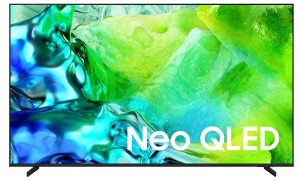
The Samsung QN80H represents a major refinement of Samsung’s Neo QLED technology. It combines a brighter Mini-LED backlight system with improved local dimming precision, resulting in better contrast, deeper blacks, and more vibrant HDR highlights than its predecessor. Powered by Samsung’s NQ4 AI Gen2 Processor, the TV intelligently enhances picture clarity, color accuracy, and motion smoothness across virtually all content.
One of the biggest strengths of the QN80H is its HDR performance. With peak HDR brightness reaching around 1,500 nits, HDR movies and games appear significantly more impactful and realistic. Samsung also equips the QN80H with NQ HDR+, improved AI HDR remastering, and Supreme Mini LED Dimming, helping it produce brighter highlights without sacrificing black levels.
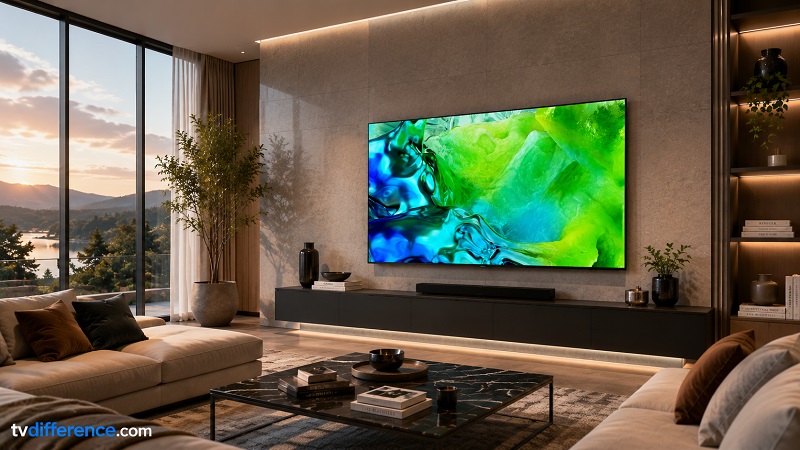
Gaming is another area where the QN80H excels. It supports 4K at 144Hz across all four HDMI ports, along with VRR, ALLM, FreeSync Premium Pro, and Samsung’s Gaming Hub platform. The addition of DLG 240Hz support also provides competitive gamers with smoother motion at lower resolutions.
The smart TV experience is equally premium. Running Samsung’s latest Tizen OS, the QN80H includes advanced AI features like Vision AI Companion, Live Translate, Generative Wallpaper, and built-in support for both Alexa and Google Assistant. Connectivity also improves with Wi-Fi 6E support.
Audio performance remains solid with a 30W 2-channel system, enhanced by Dolby Atmos, Object Tracking Sound Lite, and Adaptive Sound Pro. While most buyers may still prefer a soundbar for cinematic immersion, the built-in audio is more refined than typical mid-range TVs.
Overall, the Samsung QN80H delivers brighter HDR, improved picture quality, and stronger gaming performance, making it one of Samsung’s most compelling Neo QLED TVs for 2026.
| Samsung QN80H Prices | |
| 100-inch (QN100QN80HFXZA) | Check Today’s Price (Amazon.com)… |
| 85-inch (QN85QN80HAFXZA) | Check Today’s Price (Amazon.com)… |
| 75-inch (QN75QN80HAFXZA) | Check Today’s Price (Amazon.com)… |
| 65-inch (QN65QN80HAFXZA) | Check Today’s Price (Amazon.com)… |
| 55-inch (QN55QN80HAFXZA) | Check Today’s Price (Amazon.com)… |
Samsung QN80F (2025) Short Overview
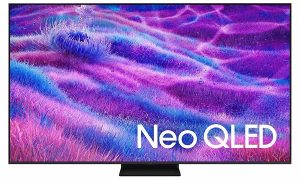
The Samsung QN80F is the predecessor to the QN80H and remains a strong Neo QLED TV in its own right. It already introduced Samsung’s Mini-LED backlighting to the upper mid-range segment, offering strong brightness, excellent gaming support, and premium smart features at a more accessible price than flagship models like the QN90F.
Like the newer model, the QN80F uses the NQ4 AI Gen2 Processor and supports up to 144Hz refresh rate with HDMI 2.1 gaming features. Motion handling is excellent, making the TV ideal for sports, gaming, and fast-action content.
The TV’s Neo Quantum HDR implementation still delivers impressive HDR quality, though it cannot match the brightness or local dimming precision of the newer QN80H. With around 1,000 nits peak HDR brightness, the QN80F still performs very well in most rooms, but HDR highlights are not quite as striking.
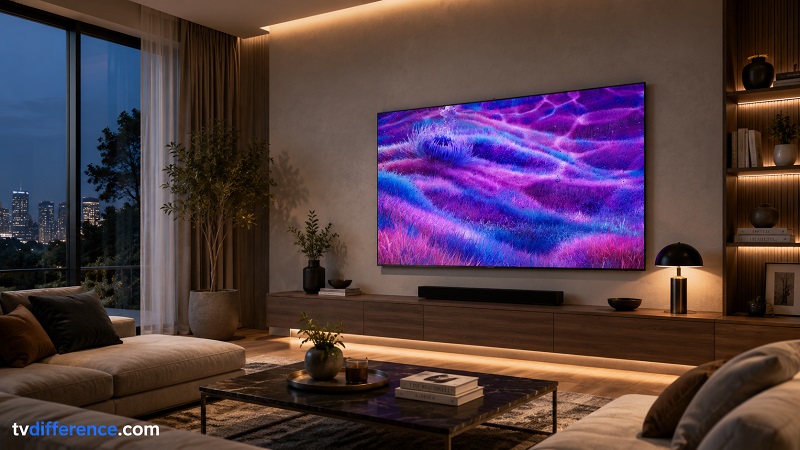
Gaming features remain excellent. The TV supports VRR, ALLM, FreeSync Premium Pro, and Samsung Gaming Hub. Input lag is very low, and all four HDMI ports support high-bandwidth gaming features.
The QN80F also includes a more premium 4-channel 30W speaker system, paired with Dolby Atmos and Object Tracking Sound Lite. In practice, it can sound slightly wider and fuller than the newer QN80H despite the latter’s picture improvements.
In short, the Samsung QN80F is still an excellent Neo QLED TV, especially for buyers who want premium gaming features and Mini-LED technology at a lower price.
| Samsung QN80F Prices | |
| 100-inch (QN100QN80FFXZA) | Check Today’s Price (Amazon.com)… |
| 85-inch (QN85QN80FAFXZA) | Check Today’s Price (Amazon.com)… |
| 75-inch (QN75QN80FAFXZA) | Check Today’s Price (Amazon.com)… |
| 65-inch (QN65QN80FAFXZA) | Check Today’s Price (Amazon.com)… |
| 55-inch (QN55QN80FAFXZA) | Check Today’s Price (Amazon.com)… |
Samsung QN80H vs QN80F Specs Comparison Table
Here’s a quick side-by-side look at the key specifications of the Samsung QN80H and Samsung QN80F.
| Feature | Samsung QN80H | Samsung QN80F | ||||||||||
| Year | 2026 | 2025 | ||||||||||
| Available Sizes | 55″, 65″, 75″, 85″, 100″ | 55″, 65″, 75″, 85″, 100″ | ||||||||||
| Display Type | Neo QLED with Mini-LED | Neo QLED with Mini-LED | ||||||||||
| Processor | NQ4 AI Gen2 Processor | NQ4 AI Gen2 Processor | ||||||||||
| HDR Technology | NQ HDR+ | Neo Quantum HDR | ||||||||||
| Peak HDR Brightness | ~1,500 nits | ~1,000 nits | ||||||||||
| Refresh Rate | 144Hz (DLG 240Hz) | 144Hz | ||||||||||
| Motion Technology | Motion Xcelerator 144Hz | Motion Xcelerator 144Hz | ||||||||||
| Local Dimming | Supreme Mini LED Dimming | Supreme UHD Dimming | ||||||||||
| Gaming Features | VRR, ALLM, FreeSync Premium Pro, Gaming Hub | VRR, ALLM, FreeSync Premium Pro, Gaming Hub | ||||||||||
| HDMI Ports | 4 × HDMI 2.1 | 4 × HDMI 2.1 | ||||||||||
| Maximum Gaming Input | 4K @ 144Hz | 4K @ 144Hz | ||||||||||
| Audio System | 2CH 30W | 4CH 30W | ||||||||||
| Dolby Atmos | Yes | Yes | ||||||||||
| Smart Platform | Tizen OS | Tizen OS | ||||||||||
| Wi-Fi | Wi-Fi 6E | Wi-Fi 5 | ||||||||||
| Bluetooth | Bluetooth 5.3 | Bluetooth 5.3 | ||||||||||
| Design | Monolith Edge | Simple Chamfer | ||||||||||
| Stand Type | Round Feet | Aero Center | ||||||||||
| Price | Typically Higher | Typically Lower | ||||||||||
|
|
The Differences Between Samsung QN80H and QN80F
Although both TVs share many premium Samsung features, there are several meaningful upgrades in the newer QN80H that help justify its higher positioning.
1. HDR Brightness and HDR Impact
The biggest improvement of the Samsung QN80H is its significantly higher HDR brightness. With around 1,500 nits peak brightness, the QN80H can deliver brighter highlights, stronger specular effects, and more impactful HDR scenes than the QN80F, which reaches around 1,000 nits. This allows HDR movies, games, and streaming content to appear more vibrant and realistic, especially in bright rooms where the additional brightness helps maintain better image punch and visibility. If you regularly watch HDR content, the difference between these two TVs is quite noticeable.
2. Better Contrast and Local Dimming Performance
Samsung upgraded the local dimming system on the QN80H with Supreme Mini LED Dimming, allowing the TV to control its Mini-LED backlight with greater precision. As a result, the QN80H produces deeper blacks, less blooming around bright objects, and better shadow detail compared to the QN80F. Dark scenes in movies and games look cleaner, more natural, and more immersive overall. This improvement is especially beneficial for watching movies in darker rooms where contrast performance becomes more important.
3. Improved Overall Picture Quality
Beyond brightness alone, the QN80H also delivers a more refined overall picture quality. Samsung improved the TV’s handling of contrast, black uniformity, and color reproduction, helping HDR scenes look more balanced and realistic. Bright scenes appear more dynamic while darker scenes preserve more detail without looking gray or washed out. Combined with Samsung’s AI-powered image processing, the QN80H delivers a more refined and premium viewing experience overall.
4. More Advanced HDR Processing
While both TVs support HDR10+, the QN80H uses Samsung’s newer NQ HDR+ technology, which provides more advanced tone mapping and HDR optimization. This allows the TV to better balance extremely bright and dark areas within the same scene, producing a more realistic image with improved highlight detail. HDR content simply looks more polished, brighter, and more cinematic on the QN80H.
5. Faster and More Future-Proof Connectivity
The Samsung QN80H also upgrades to Wi-Fi 6E, while the QN80F still uses Wi-Fi 5. Although both TVs stream content smoothly, Wi-Fi 6E offers better bandwidth handling, lower latency, and improved wireless stability in busy home networks. This makes the QN80H feel a bit more future-ready for high-quality streaming, cloud gaming, and smart-home integration.
6. Audio System Differences
Interestingly, the QN80F actually includes a 4-channel 30W speaker system, while the QN80H uses a 2-channel 30W setup. Although Samsung improved voice enhancement and audio processing on the QN80H, the QN80F can still sound slightly wider and fuller right out of the box. Buyers who do not plan to add a soundbar may appreciate the QN80F’s stronger built-in speaker configuration.
What is Better in Samsung QN80H?
The Samsung QN80H is clearly the better TV overall if you want the best picture quality and strongest HDR performance. Its significantly brighter HDR output, improved Mini-LED dimming precision, better black uniformity, and more advanced HDR processing allow it to deliver a noticeably more premium viewing experience than the older QN80F. The addition of newer AI-powered smart features and Wi-Fi 6E support also helps make the QN80H feel more modern and future-ready. For buyers who prioritize HDR movies, next-generation gaming, and high-end picture quality, the Samsung QN80H is absolutely the better choice.
| Samsung QN80H Prices | |
| 100-inch (QN100QN80HFXZA) | Check Today’s Price (Amazon.com)… |
| 85-inch (QN85QN80HAFXZA) | Check Today’s Price (Amazon.com)… |
| 75-inch (QN75QN80HAFXZA) | Check Today’s Price (Amazon.com)… |
| 65-inch (QN65QN80HAFXZA) | Check Today’s Price (Amazon.com)… |
| 55-inch (QN55QN80HAFXZA) | Check Today’s Price (Amazon.com)… |
That said, the Samsung QN80F still remains an excellent Neo QLED TV and may actually provide better value for the money for many buyers, especially as its price becomes more affordable. It still offers Mini-LED backlighting, excellent gaming support with 4K 144Hz, Samsung’s powerful NQ4 AI Gen2 Processor, and a surprisingly capable 4-channel speaker system. If you want premium Samsung gaming features and strong overall performance without paying extra for the newest upgrades, the Samsung QN80F is still a very attractive option.
| Samsung QN80F Prices | |
| 100-inch (QN100QN80FFXZA) | Check Today’s Price (Amazon.com)… |
| 85-inch (QN85QN80FAFXZA) | Check Today’s Price (Amazon.com)… |
| 75-inch (QN75QN80FAFXZA) | Check Today’s Price (Amazon.com)… |
| 65-inch (QN65QN80FAFXZA) | Check Today’s Price (Amazon.com)… |
| 55-inch (QN55QN80FAFXZA) | Check Today’s Price (Amazon.com)… |