Sony’s flagship LED TV lineup gets a major update with the arrival of the Sony BRAVIA 9 II. Positioned above the Sony BRAVIA 7 II in Sony’s 2026 lineup and introduced as the successor to the highly regarded Sony BRAVIA 9, the new model keeps Sony’s focus on exceptional brightness, strong contrast, accurate colors, and sophisticated picture processing while introducing a completely new RGB backlight system.
At first glance, the BRAVIA 9 II may look like a straightforward upgrade to the original BRAVIA 9. However, Sony has made some significant changes under the hood. The newer model uses True RGB technology with RGB Backlight Master Drive Pro, adds a new anti-reflective screen technology, and improves viewing angles. At the same time, both TVs retain a 120Hz panel, Sony’s XR Processor, 4K resolution, Dolby Vision support, and strong gaming features.
So, is the Sony BRAVIA 9 II actually a better choice than the original BRAVIA 9? Let’s find out.
Sony BRAVIA 9 II Short Overview
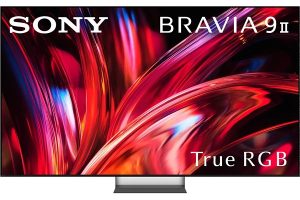
The Sony BRAVIA 9 II is Sony’s flagship 4K LED TV for 2026. It sits at the top of Sony’s non-OLED lineup and introduces the company’s new True RGB backlight technology. Instead of relying on a conventional blue Mini LED backlight combined with quantum-dot color conversion, the BRAVIA 9 II uses independently controlled red, green, and blue LEDs to produce light.
This new system is controlled by Sony’s RGB Backlight Master Drive Pro, which is designed to provide extremely precise control over brightness and color. Combined with the XR Processor, the TV is designed to deliver bright HDR highlights, vivid colors, deep blacks, and highly accurate image reproduction.
The BRAVIA 9 II also introduces RGB TRILUMINOS Max and XR Contrast Booster 40. These technologies work together with the RGB backlight to improve color volume and contrast, particularly in bright HDR scenes. Sony also retains its sophisticated image processing, which remains one of the company’s biggest advantages over many competing Mini LED TVs.
Another major upgrade is the screen coating. The BRAVIA 9 II uses Sony’s Immersive Black Screen Pro technology to significantly reduce reflections. This makes the TV particularly attractive for bright living rooms where windows or lamps can create distracting reflections on a conventional glossy screen.
The BRAVIA 9 II is available in 65-inch, 75-inch, 85-inch, and 115-inch sizes. However, the 115-inch model differs slightly from the smaller models in its screen finish, so buyers should pay attention to the exact size when comparing specifications.
For gaming, the BRAVIA 9 II continues to offer a native 120Hz panel, VRR, ALLM, and 4K/120Hz support. However, only two of its four HDMI ports support 4K/120Hz and VRR, which may be a limitation for users with several next-generation gaming devices.
| Sony BRAVIA 9 II Prices | |
| 115-Inch (K-115XR90M2) | Check Today’s Price… |
| 85-Inch (K-85XR90M2) | Check Today’s Price… |
| 75-Inch (K-75XR90M2) | Check Today’s Price… |
| 65-Inch (K-65XR90M2) | Check Today’s Price… |
Sony BRAVIA 9 Short Overview
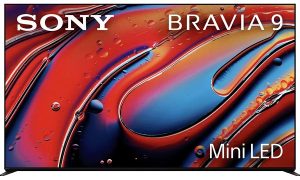
The Sony BRAVIA 9 was Sony’s flagship 4K Mini LED TV for 2024 and quickly became one of the company’s most impressive LED televisions. It uses a conventional Mini LED QLED backlight combined with Sony’s XR Backlight Master Drive technology.
Thousands of Mini LEDs are precisely controlled to create strong contrast between bright and dark areas of the image. The TV also features XR Contrast Booster 30 and Sony’s XR TRILUMINOS Pro, giving the BRAVIA 9 excellent brightness, color reproduction, and HDR performance.
One of the biggest strengths of the original BRAVIA 9 is its image processing. Sony’s XR Processor analyzes and optimizes the picture in real time, helping improve contrast, clarity, color, and detail. This makes the BRAVIA 9 particularly impressive with movies, streaming content, and lower-quality sources.
The BRAVIA 9 also supports 4K at 120Hz, VRR, ALLM, and other HDMI 2.1 features. Its four HDMI inputs provide more connectivity flexibility than many competing flagship TVs, although only HDMI 3 and HDMI 4 support VRR and the full 4K/120Hz gaming functionality.
Another advantage is its X-Anti Reflection screen technology. The original BRAVIA 9 handles reflections reasonably well, but the newer BRAVIA 9 II takes a much more aggressive approach with its Immersive Black Screen Pro coating.
The BRAVIA 9 was originally available in 65-inch, 75-inch, and 85-inch sizes. Because it is an older model, availability is becoming more limited, although discounted pricing can make it particularly interesting for buyers who don’t necessarily need Sony’s newest display technology.
| Sony BRAVIA 9 Prices | |
| 85-Inch (K-85XR90) | Check Today’s Price (Amazon.com)… |
| 75-Inch (K-75XR90) | Check Today’s Price (Amazon.com)… |
| 65-Inch (K-65XR90) | Check Today’s Price (Amazon.com)… |
Sony BRAVIA 9 II vs BRAVIA 9 Specs Comparison
Before we dive deeper into their differences, let’s take a look at how the Sony BRAVIA 9 II and Sony BRAVIA 9 compare on paper. The table below highlights their most important specifications, including display technology, backlight, picture processing, gaming features, connectivity, and smart TV capabilities.
| Feature | Sony BRAVIA 9 II | Sony BRAVIA 9 | |||||||
| Model Year | 2026 | 2024 | |||||||
| Available Sizes | 65″, 75″, 85″, 115″ | 65″, 75″, 85″ | |||||||
| Display Type | LCD (True RGB) | LCD (Mini LED QLED) | |||||||
| Backlight | RGB LED | Mini LED (QLED) | |||||||
| Backlight Control Technology | RGB Backlight Master Drive Pro | XR Backlight Master Drive | |||||||
| Color Technology | RGB TRILUMINOS Max | XR TRILUMINOS Pro | |||||||
| Processor | XR Processor | XR Processor | |||||||
| Resolution | 4K UHD | 4K UHD | |||||||
| Native Refresh Rate | 120Hz | 120Hz | |||||||
| Viewing Angle | X-Wide Angle Pro | Wide Viewing Angle | |||||||
| Screen Finish | Immersive Black Screen Pro (except 115-inch) | X-Anti Reflection | |||||||
| Local Dimming | Yes | Yes | |||||||
| Contrast Enhancement | XR Contrast Booster 40 | XR Contrast Booster 30 | |||||||
| HDR | HDR10, HLG, Dolby Vision | HDR10, HLG, Dolby Vision | |||||||
| VRR | Yes | Yes | |||||||
| ALLM | Yes | Yes | |||||||
| HDMI Ports | 4 | 4 | |||||||
| HDMI 2.1 Features | 4K/120, VRR, ALLM, eARC | 4K/120, VRR, ALLM, eARC | |||||||
| Full HDMI 2.1 Ports | 2 | 2 | |||||||
| Smart TV Platform | Google TV | Google TV | |||||||
| Wi-Fi | Wi-Fi 6E | Wi-Fi 6 | |||||||
| Bluetooth | Bluetooth 5.3 | Bluetooth 5.3 | |||||||
| PS5 Features | Auto HDR Tone Mapping, Auto Genre Picture Mode | Auto HDR Tone Mapping, Auto Genre Picture Mode | |||||||
| Sony Pictures Core | Yes | Yes | |||||||
| Price | Higher | Lower | |||||||
|
|
The Differences Between Sony BRAVIA 9 II and BRAVIA 9
Before deciding which TV is right for you, it’s important to understand the key differences between these two flagship Sony TVs.
1. Backlight Technology
The biggest difference between the two TVs is the backlight system.
The Sony BRAVIA 9 uses a conventional Mini LED QLED configuration. It combines thousands of Mini LEDs with Sony’s XR Backlight Master Drive to achieve precise local dimming and excellent contrast.
The BRAVIA 9 II, however, takes a completely different approach with True RGB technology. Instead of using a conventional blue LED backlight and quantum-dot color conversion, it uses dedicated red, green, and blue LEDs.
This allows the BRAVIA 9 II to produce a wider and purer range of colors while maintaining the high brightness expected from a flagship LED TV.
This is more than a minor specification upgrade. It is the fundamental display technology that separates the BRAVIA 9 II from its predecessor.
Winner: Sony BRAVIA 9 II
2. Brightness and HDR Performance
Both TVs are extremely bright, but the BRAVIA 9 II takes HDR performance another step forward.
The original BRAVIA 9 was already designed to deliver exceptionally high brightness, making it excellent for HDR movies and bright-room viewing. The BRAVIA 9 II builds on this with its RGB backlight system and Luminance Booster Pro.
The result is a TV capable of producing extremely bright highlights while maintaining impressive color intensity. This is particularly noticeable in HDR content containing bright lights, fire, sunlight, explosions, and other high-luminance scenes.
The BRAVIA 9 II therefore delivers a more impactful HDR experience, especially when viewing demanding HDR content.
Winner: Sony BRAVIA 9 II
3. Color Performance
Color is another area where the BRAVIA 9 II has a significant advantage.
The original BRAVIA 9 already produces excellent colors through its QLED technology and XR TRILUMINOS Pro system. However, the BRAVIA 9 II’s RGB TRILUMINOS Max system allows the TV to produce colors directly through independently controlled red, green, and blue LEDs.
This gives the newer model greater color volume and improved color purity, particularly at high brightness levels.
In other words, the BRAVIA 9 II doesn’t simply become brighter; it is designed to remain more colorful as brightness increases.
Winner: Sony BRAVIA 9 II
4. Reflection Handling
The BRAVIA 9 II also brings a major improvement for bright rooms.
The original BRAVIA 9 uses Sony’s X-Anti Reflection technology, which helps reduce reflections from windows and artificial lights.
The 65-, 75-, and 85-inch BRAVIA 9 II models go further with Sony’s Immersive Black Screen Pro coating. This anti-glare screen treatment significantly reduces direct reflections and makes the TV easier to watch in rooms with strong ambient light.
This can make a surprisingly large difference during daytime viewing.
If your living room has large windows or lights positioned opposite the television, the BRAVIA 9 II is the more attractive option.
Winner: Sony BRAVIA 9 II
5. Viewing Angle
Sony has also improved viewing-angle performance on the BRAVIA 9 II.
The original BRAVIA 9 offers good viewing angles for a high-end LED TV, but contrast and color can still change when watching from far off-center.
The BRAVIA 9 II introduces X-Wide Angle Pro, which is designed to preserve color and contrast more effectively when viewed from different seating positions.
This makes the newer model a better choice for large family rooms where viewers aren’t always sitting directly in front of the screen.
However, OLED TVs can still provide superior viewing angles overall.
Winner: Sony BRAVIA 9 II
6. Picture Processing
Interestingly, this is one area where there isn’t a major generational change.
Both TVs use Sony’s XR Processor, so the fundamental image-processing philosophy remains similar.
Sony’s processing is one of the biggest reasons these TVs perform so well with movies and streaming content. The processor handles upscaling, contrast, color, clarity, and motion processing to create a more natural and refined image.
The BRAVIA 9 II benefits from the newer RGB backlight hardware, but the original BRAVIA 9 remains extremely capable when it comes to image processing.
Winner: Tie
7. Gaming Performance
Gaming is more complicated because the BRAVIA 9 II isn’t a dramatic upgrade over the original model in this area.
Both TVs feature a 120Hz native panel, VRR, ALLM, and 4K/120Hz support. Both also have four HDMI inputs, with HDMI 3 and HDMI 4 supporting 4K/120Hz and VRR.
This means both TVs are excellent choices for PlayStation 5 and Xbox Series X gaming.
However, neither TV is designed specifically for enthusiasts who want four full-bandwidth HDMI 2.1 ports or refresh rates above 120Hz.
The BRAVIA 9 II does offer the newer display technology and improved picture quality, but its gaming connectivity is broadly similar to the original BRAVIA 9.
Winner: Tie
8. Connectivity and Smart Features
Both TVs provide four HDMI inputs, eARC, VRR, ALLM, Google TV, Bluetooth 5.3, and Sony’s gaming features for PlayStation 5.
The BRAVIA 9 II does gain an advantage with Wi-Fi 6E, while the original BRAVIA 9 uses Wi-Fi 6.
For most users, however, this difference won’t have a dramatic impact on everyday streaming performance.
Both TVs also offer access to Google TV and Sony’s entertainment ecosystem, making the overall smart TV experience quite similar.
Winner: Sony BRAVIA 9 II
9. Available Screen Sizes
The BRAVIA 9 II expands the lineup with a massive 115-inch option.
The original BRAVIA 9 is available in 65-inch, 75-inch, and 85-inch sizes, while the BRAVIA 9 II adds the 115-inch model for buyers looking for an enormous home-theater display.
The 115-inch BRAVIA 9 II is obviously an extremely specialized product, but it gives the new generation a size advantage.
For more conventional screen sizes, however, both models are available in 65-, 75-, and 85-inch sizes.
Winner: Sony BRAVIA 9 II
10. Price
The Sony BRAVIA 9 II is more expensive than the original BRAVIA 9 at launch. The newer model carries a premium because of its new True RGB backlight technology, improved reflection handling, and other display improvements.
The BRAVIA 9, however, is now an older model and can often be found at a lower price. If the price difference is substantial, the BRAVIA 9 becomes a much more attractive option because it still offers excellent picture quality, strong HDR performance, a 120Hz panel, and Sony’s excellent image processing.
Winner: Sony BRAVIA 9
Is Sony BRAVIA 9 II a Better Choice?
If you want the best overall picture quality and the most advanced Sony LED TV, the Sony BRAVIA 9 II is the better choice. Its True RGB backlight technology, improved color performance, stronger HDR capabilities, better viewing angles, and superior reflection handling make it a meaningful upgrade over the original BRAVIA 9. We especially recommend the BRAVIA 9 II for buyers who prioritize premium movie watching, HDR performance, and bright-room viewing and don’t mind paying more for the latest technology.
| Sony BRAVIA 9 II Prices | |
| 115-Inch (K-115XR90M2) | Check Today’s Price… |
| 85-Inch (K-85XR90M2) | Check Today’s Price… |
| 75-Inch (K-75XR90M2) | Check Today’s Price… |
| 65-Inch (K-65XR90M2) | Check Today’s Price… |
On the other hand, the Sony BRAVIA 9 is still an excellent choice if you can find it at a significantly lower price. It delivers outstanding brightness, contrast, color accuracy, 120Hz performance, Dolby Vision, and Sony’s excellent XR processing, while offering most of the features that made it such a strong flagship TV. If the price difference between the two models is large, the BRAVIA 9 can provide better value and remains a highly capable premium TV.
| Sony BRAVIA 9 Prices | |
| 85-Inch (K-85XR90) | Check Today’s Price (Amazon.com)… |
| 75-Inch (K-75XR90) | Check Today’s Price (Amazon.com)… |
| 65-Inch (K-65XR90) | Check Today’s Price (Amazon.com)… |