The Hisense U7SG and Hisense U75QG are two generations of Hisense’s popular mid-range Mini-LED TVs. The U75QG was introduced as part of Hisense’s 2025 lineup, while the newer U7SG arrives as its 2026 successor. Both TVs are designed to deliver strong picture quality, impressive HDR brightness, and advanced gaming features without moving into the company’s flagship price range.
At first glance, the two models have many similarities. Both offer 4K resolution, Mini-LED backlighting, Quantum Dot color, a native 165Hz refresh rate, HDMI 2.1 connectivity, VRR, ALLM, and Google TV. However, the U7SG introduces an important improvement with its anti-reflective screen treatment, while also refining the overall viewing experience with improved reflection handling. These changes make the newer model particularly interesting for buyers who watch TV in bright rooms or want a more versatile big-screen television.
Hisense U7SG (2026) Short Overview
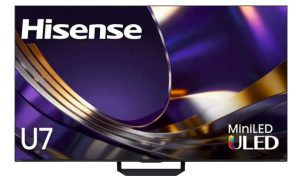
The Hisense U7SG is the company’s 2026 mid-range ULED Mini-LED TV and serves as the successor to the U75QG. It is designed to combine high brightness, strong contrast, wide color reproduction, and advanced gaming capabilities in a package that remains below Hisense’s flagship models.
The U7SG uses Mini-LED backlighting with Quantum Dot color and full-array local dimming. Depending on the screen size, the TV can offer hundreds or thousands of individual dimming zones and advertised peak brightness of up to 3,000 nits on many sizes. The larger 116-inch model is advertised at up to 4,000 nits, making it particularly impressive for large-screen HDR viewing.
One of the biggest changes compared with the U75QG is the matte anti-reflective screen. On the 55-, 65-, 75-, and 85-inch versions, this screen treatment is designed to reduce distracting reflections from windows, lamps, and other light sources. This gives the U7SG an important advantage for living rooms where controlling ambient light is difficult.
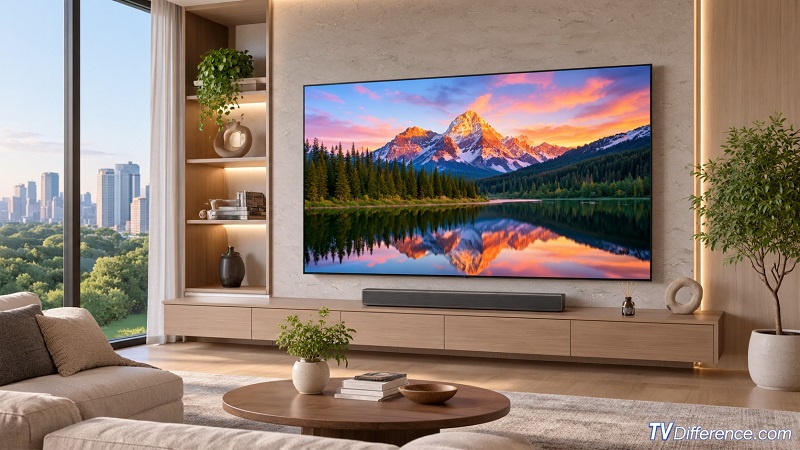
The U7SG is also highly capable for gaming. It supports a native 165Hz refresh rate, VRR, ALLM, AMD FreeSync Premium Pro, and HDMI 2.1 connectivity. It supports 4K gaming at up to 165Hz, while its Game Booster mode can reach up to 330Hz at reduced resolution on some sizes. The 100-inch version is rated for up to 288Hz in this boosted mode.
The TV supports Dolby Vision, Dolby Vision IQ, HDR10+, HDR10, HLG, and IMAX Enhanced. It runs Google TV and features a 2.1.2-channel sound system on smaller sizes, while the 116-inch model steps up to a 110W 6.2.2-channel system. With screen sizes extending from 55 inches all the way to 116 inches, the U7SG is one of Hisense’s most versatile mid-range options for 2026.
| Hisense U7SG Prices | |
| 116-Inch (116U7SG) | Check Today’s Price… |
| 100-Inch (100U7SG) | Check Today’s Price (Amazon.com)… |
| 85-Inch (85U7SG) | Check Today’s Price (Amazon.com)… |
| 75-Inch (75U7SG) | Check Today’s Price (Amazon.com)… |
| 65-Inch (65U7SG) | Check Today’s Price (Amazon.com)… |
| 55-Inch (55U7SG) | Check Today’s Price… |
Hisense U75QG (2025) Short Overview
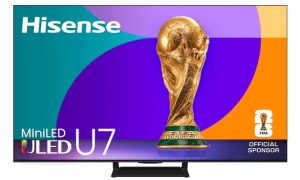
The Hisense U75QG was one of Hisense’s main mid-range Mini-LED TVs for 2025. It sits below the U8QG in the company’s lineup and was designed to offer many premium features at a more accessible price.
The U75QG combines Mini-LED backlighting, Quantum Dot color, and full-array local dimming to deliver excellent brightness and strong black levels. Hisense advertised peak brightness of up to 3,000 nits on many sizes, while the 116-inch model is rated at up to 4,000 nits, making the U75QG particularly attractive for HDR movies, sports, and gaming.
The U75QG also has a strong gaming feature set. It supports a native 165Hz refresh rate, VRR, ALLM, AMD FreeSync Premium Pro, and HDMI 2.1 connectivity. It can handle 4K at 165Hz and supports up to 288Hz at 1080p, giving PC gamers considerable flexibility.
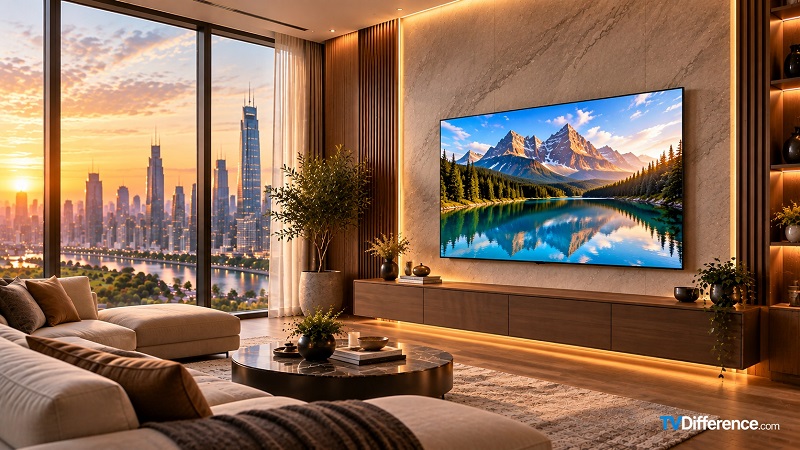
For HDR, the U75QG supports Dolby Vision, Dolby Vision IQ, HDR10+, HDR10, and HLG. It also includes IMAX Enhanced support and runs Google TV, providing access to a large selection of streaming applications and smart features.
The U75QG is available in 55-, 65-, 75-, 85-, 100-, and 116-inch sizes. The U75QG features a 2.1.2-channel sound system on its smaller sizes, with output ranging from 50W to 60W depending on screen size. The 116-inch model steps up to a 110W 6.2.2-channel system with Devialet tuning.
| Hisense U75QG Prices | |
| 116-Inch (116U75QG) | Check Today’s Price (Amazon.com)… |
| 100-Inch (100U75QG) | Check Today’s Price (Amazon.com)… |
| 85-Inch (85U75QG) | Check Today’s Price (Amazon.com)… |
| 75-Inch (75U75QG) | Check Today’s Price (Amazon.com)… |
| 65-Inch (65U75QG) | Check Today’s Price (Amazon.com)… |
| 55-Inch (55U75QG) | Check Today’s Price (Amazon.com)… |
Hisense U7SG vs U75QG Specifications
Here’s a quick look at how these two TVs compare:
| Feature | Hisense U7SG (2026) | Hisense U75QG (2025) | ||||||||||||
| Release Year | 2026 | 2025 | ||||||||||||
| Available Sizes | 55″, 65″, 75″, 85″, 100″, 116″ | 55″, 65″, 75″, 85″, 100″, 116″ | ||||||||||||
| Display Technology | Mini-LED | Mini-LED | ||||||||||||
| Color Technology | Quantum Dot | Quantum Dot | ||||||||||||
| Resolution | 4K UHD (3840 × 2160) | 4K UHD (3840 × 2160) | ||||||||||||
| Panel Type | IPS-ADS Pro on 55″; VA on larger sizes | IPS-ADS Pro on 55″; VA on larger sizes | ||||||||||||
| Native Refresh Rate | 165Hz | 165Hz | ||||||||||||
| Peak Brightness | Up to 3,000 nits; 116″ up to 4,000 nits | Up to 3,000 nits; 116″ up to 4,000 nits | ||||||||||||
| Local Dimming | Full Array Mini-LED | Full Array Mini-LED | ||||||||||||
| Screen Treatment | Anti-Reflection / low-reflection; finish varies by size | Anti-Reflection; treatment varies by size | ||||||||||||
| Processor | Hi-View AI Engine Pro | Hi-View AI Engine Pro; 116″ uses Hi-View AI Engine X | ||||||||||||
| HDR Support | Dolby Vision, Dolby Vision IQ, HDR10+, HDR10, HLG | Dolby Vision, Dolby Vision IQ, HDR10+, HDR10, HLG | ||||||||||||
| IMAX Enhanced | Yes | Yes | ||||||||||||
| Gaming | VRR, ALLM, FreeSync Premium Pro | VRR, ALLM, FreeSync Premium Pro | ||||||||||||
| Maximum Native 4K Refresh Rate | 165Hz | 165Hz | ||||||||||||
| HDMI 2.1 | 4 on 55″-100″; 3 on 116″ | 4 on 55″-100″; 3 on 116″ | ||||||||||||
| Smart Platform | Google TV | Google TV | ||||||||||||
| Audio | 2.1.2-channel, 50W–60W depending on size; 110W 6.2.2-channel on 116″ | 2.1.2-channel, 50W–60W depending on size; 110W 6.2.2-channel on 116″ | ||||||||||||
| Audio Tuning | Devialet | Devialet on 116″; varies by model/size | ||||||||||||
| Price | Higher | Lower | ||||||||||||
|
|
Note: The 116-inch versions of both TVs have significantly different hardware from the smaller models, so some specifications—including brightness, audio, reflection treatment, and processing—vary by screen size.
The Differences Between Hisense U7SG and U75QG
Although the Hisense U7SG and U75QG share many core technologies, the newer U7SG introduces several changes that can make it the better choice depending on your viewing environment and priorities.
1. Matte Screen vs Glossy Screen
The most important difference between the two TVs is their screen finish.
The U7SG uses a low-reflection anti-glare treatment, with independent testing finding its matte finish particularly effective at reducing direct reflections. The U75QG also includes anti-reflection treatment, although some tested U75QG units have a glossy screen and show more visible direct reflections than the U7SG.
This gives the U7SG a significant advantage in bright rooms. If your TV is positioned opposite a window or near several lamps, the U7SG can provide a more comfortable viewing experience.
However, it is important to note that the 100-inch and 116-inch U7SG models use glossy screens, so the matte-screen advantage applies primarily to the smaller sizes.
2. Better Contrast
The Hisense U7SG also has an advantage in contrast performance. Independent testing found that the newer model produces better contrast than the U75QG, giving it an advantage when watching movies in a darker room. Combined with its effective local dimming, this helps the U7SG produce deeper-looking blacks and stronger separation between bright highlights and dark areas.
3. Built-in Audio Output
Interestingly, the newer U7SG does not win every specification battle. The built-in audio systems vary by screen size on both models, with the smaller U7SG and U75QG versions using 2.1.2-channel systems rated between 50W and 60W. Both 116-inch models step up to a more powerful 110W 6.2.2-channel system.
Because the exact audio configuration depends on screen size, buyers should check the specifications of the particular size they plan to purchase. The U7SG and U75QG can therefore be quite similar in audio hardware, although their audio tuning and implementation may differ by model and size.
4. Value for Money
This is where the Hisense U75QG can become extremely competitive.
As a 2025 model, the U75QG may receive larger discounts as retailers clear inventory for newer models. Since it already provides Mini-LED, 165Hz gaming, HDMI 2.1, strong HDR brightness, and Google TV, it can deliver excellent performance for the money.
If the U75QG is substantially cheaper than the U7SG, the savings may outweigh the newer model’s improvements.
On the other hand, if the two models are priced relatively close together, the U7SG’s matte screen and newer-generation design make it the more compelling purchase.
Why Should You Choose the Hisense U7SG?
The Hisense U7SG is the better choice if you want the more versatile overall package. Its matte anti-reflective screen, strong Mini-LED performance, 165Hz refresh rate, and advanced gaming features make it particularly attractive for buyers who watch TV in bright rooms, enjoy sports, or want a large-screen TV for movies and gaming. The U7SG is also the newer 2026 model, so when the price difference is relatively small, we recommend choosing the Hisense U7SG for its improved reflection handling and more flexible overall design.
| Hisense U7SG Prices | |
| 116-Inch (116U7SG) | Check Today’s Price… |
| 100-Inch (100U7SG) | Check Today’s Price (Amazon.com)… |
| 85-Inch (85U7SG) | Check Today’s Price (Amazon.com)… |
| 75-Inch (75U7SG) | Check Today’s Price (Amazon.com)… |
| 65-Inch (65U7SG) | Check Today’s Price (Amazon.com)… |
| 55-Inch (55U7SG) | Check Today’s Price… |
The Hisense U75QG remains a very good choice for buyers who prioritize value for money. It offers many of the same core strengths as the U7SG, including Mini-LED backlighting, Quantum Dot color, a native 165Hz refresh rate, HDMI 2.1, VRR, ALLM, and FreeSync Premium Pro, while its older-generation status means it may be available at a lower price. If you can find the U75QG at a significantly lower price than the U7SG, the savings can make it the smarter choice, especially if you don’t need the newer model’s matte screen.
| Hisense U75QG Prices | |
| 116-Inch (116U75QG) | Check Today’s Price (Amazon.com)… |
| 100-Inch (100U75QG) | Check Today’s Price (Amazon.com)… |
| 85-Inch (85U75QG) | Check Today’s Price (Amazon.com)… |
| 75-Inch (75U75QG) | Check Today’s Price (Amazon.com)… |
| 65-Inch (65U75QG) | Check Today’s Price (Amazon.com)… |
| 55-Inch (55U75QG) | Check Today’s Price (Amazon.com)… |