The Samsung R95H and Samsung S95H are two of Samsung’s most advanced TVs for 2026, designed to deliver outstanding picture quality through two different display technologies. The R95H is Samsung’s flagship Micro RGB TV, while the S95H is its flagship OLED model. Within their respective product families, the R95H is positioned above the Samsung R85H, while the S95H sits above the Samsung S90H. Both TVs target premium buyers, but they take different approaches to achieving impressive brightness, color reproduction, contrast, and overall viewing performance.
At first glance, both models share several premium features, including 4K resolution, advanced AI picture processing, Glare Free technology, and high refresh rates for gaming. However, their underlying display technologies create important differences in how they handle bright scenes, dark-room viewing, HDR content, and challenging lighting conditions. In this article, we’ll compare the Samsung R95H and Samsung S95H, focusing on their specifications, picture quality, gaming capabilities, and overall value to help you decide which flagship TV is the better choice for your needs.
Samsung R95H (2026) Short Overview
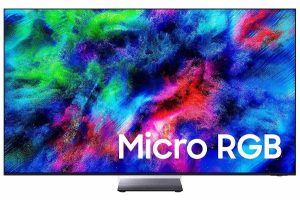
The Samsung R95H is Samsung’s premium Micro RGB TV for 2026, designed to deliver an exceptionally wide color gamut, impressive brightness, and detailed HDR images. It uses a 4K LCD display with Micro RGB backlighting, positioning it as an alternative to high-end OLED TVs for buyers who want an advanced home entertainment experience, particularly in bright living rooms.
One of the R95H’s biggest highlights is its Micro RGB AI Engine Pro. This processor works with Samsung’s Micro RGB display technology to optimize picture quality, improve image detail, and enhance the overall presentation of different types of content. Samsung also incorporates Micro RGB Precision Color 100, which is designed to reproduce 100% of the BT.2020 color gamut. This allows the TV to display an exceptionally broad range of colors, making HDR movies, nature documentaries, and colorful games look vivid and immersive.
The R95H also features Micro RGB HDR Pro, Ultimate Micro Dimming Pro, and Real Depth Enhancer. These technologies work together to improve brightness control, contrast, and perceived image depth. Unlike OLED, which controls light at the individual pixel level, Micro RGB uses a sophisticated backlighting system. Its performance therefore depends on how effectively the TV manages light across different areas of the screen.
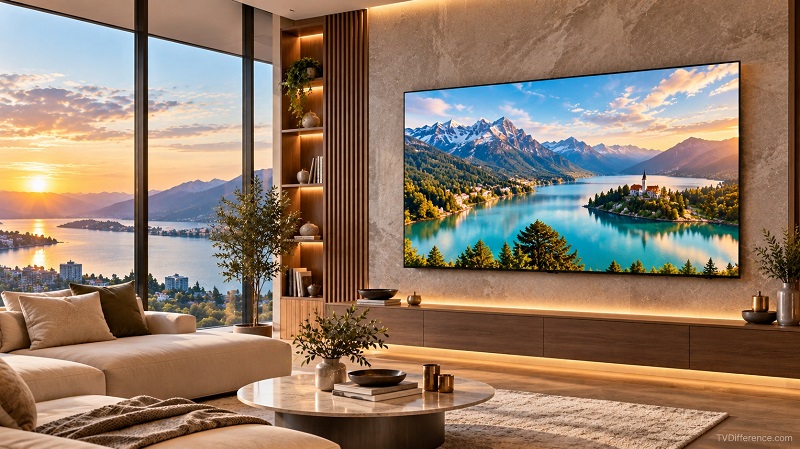
For gaming, the R95H supports Motion Xcelerator 165Hz, variable refresh rate (VRR), Auto Low Latency Mode (ALLM), AMD FreeSync Premium Pro, and HGiG. Its high refresh rate makes it suitable for compatible gaming PCs, while its HDMI connectivity supports high-frame-rate gaming. The TV also includes features such as Game Bar and Super Ultra Wide Game View to provide additional control and flexibility during gameplay.
Running Samsung’s Tizen smart TV platform, the R95H provides access to streaming applications and connected entertainment features. It also supports HDR10+, Dolby Atmos, and Samsung’s AI-powered picture and sound enhancements. With its advanced Micro RGB technology, wide color reproduction, and premium gaming capabilities, the Samsung R95H is designed for buyers seeking a flagship TV that excels in bright-room viewing and vivid HDR presentation.
| Samsung R95H Prices | |
| 85-Inch (MRN85R95HAFXZA) | Check Today’s Price… |
| 75-Inch (MRN75R95HAFXZA) | Check Today’s Price… |
| 65-Inch (MRN65R95HAFXZA) | Check Today’s Price… |
Samsung S95H (2026) Short Overview
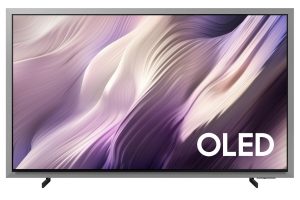
The Samsung S95H is Samsung’s flagship OLED TV for 2026, designed for viewers who prioritize exceptional contrast, deep blacks, and premium picture quality. Its 55-, 65-, and 77-inch US models use QD-OLED technology, combining OLED’s self-emissive pixels with quantum dot color reproduction. The 83-inch model uses an RGB Tandem WOLED panel instead. All sizes are designed to deliver a premium viewing experience, but the specific panel technology varies by screen size.
One of the S95H’s greatest advantages is its ability to control each pixel independently. When a scene contains a completely black area, the corresponding OLED pixels can turn off entirely, allowing the TV to produce exceptionally deep blacks and precise contrast without relying on conventional backlight zones. This is especially beneficial when watching movies with dark scenes, nighttime sequences, or subtle shadow details. Compared with a backlit display, OLED can also avoid the typical blooming or haloing that may appear around bright objects against dark backgrounds.
The S95H is powered by Samsung’s NQ4 AI Gen3 Processor, which uses AI-based processing to optimize picture quality. Its processing capabilities help improve image detail, upscale lower-resolution content, and refine the presentation of different scenes. The TV also features OLED HDR Pro, which is designed to enhance the visibility of bright highlights and shadow details in HDR content. Together with its OLED panel, these technologies aim to deliver a more immersive and refined viewing experience.
Samsung has also equipped the S95H with Glare Free technology featuring Real Black and Real Color. This combination is designed to reduce distracting reflections while preserving the deep blacks and vibrant colors that are central to the OLED viewing experience. It makes the S95H more versatile than older OLED designs when used in rooms with ambient lighting, although actual performance still depends on the room and lighting conditions.
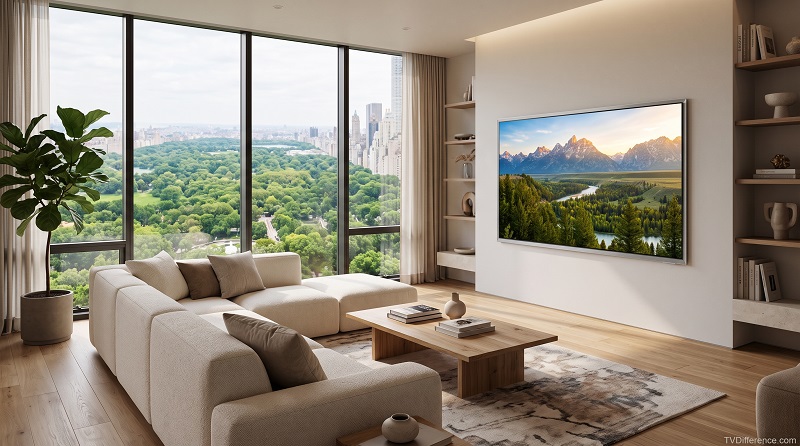
For gaming, the S95H supports Motion Xcelerator 165Hz, NVIDIA G-SYNC, AMD FreeSync Premium Pro, VRR, and ALLM. Its high refresh rate and rapid pixel response make it an excellent option for fast-paced games and compatible gaming PCs. The TV also includes Samsung’s Ultimate Gaming Pack, bringing together several gaming-focused technologies to help deliver smooth motion and responsive gameplay.
The S95H runs Samsung’s Tizen smart TV platform and supports HDR10+, Dolby Atmos, and a range of AI-powered picture and sound features. However, like other Samsung TVs, it does not support Dolby Vision. Overall, the Samsung S95H is designed for buyers who want flagship OLED picture quality, precise contrast, vibrant colors, and high-end gaming performance in one premium television.
| Samsung S95H Prices | |
| 83-inch (QN83S95HAEXZA) | Check Today’s Price… |
| 77-inch (QN77S95HAFXZA) | Check Today’s Price… |
| 65-inch (QN65S95HAFXZA) | Check Today’s Price… |
| 55-inch (QN55S95HAFXZA) | Check Today’s Price… |
Samsung R95H vs S95H Specifications
Here’s a quick comparison of the main specifications and features of the Samsung R95H and Samsung S95H.
| Feature | Samsung R95H (2026) | Samsung S95H (2026) | |||||||
| Product Category | Micro RGB TV | OLED TV | |||||||
| Display Technology | Micro RGB | OLED (QD-OLED on 55-, 65-, and 77-inch models; RGB Tandem WOLED on the 83-inch model) | |||||||
| Resolution | 4K UHD (3840 × 2160) | 4K UHD (3840 × 2160) | |||||||
| Available Screen Sizes (US) | 65, 75, 85 inches | 55, 65, 77, 83 inches | |||||||
| Refresh Rate | Up to 165Hz VRR | Up to 165Hz | |||||||
| Picture Processor | Micro RGB AI Engine Pro | NQ4 AI Gen3 Processor | |||||||
| HDR Technology | Micro RGB HDR Pro | OLED HDR Pro | |||||||
| HDR Formats | HDR10+, HLG | HDR10+, HLG | |||||||
| Color Technology | Micro RGB Precision Color 100 | Varies by screen size (QD-OLED or RGB Tandem WOLED) | |||||||
| Color Gamut Claim | 100% BT.2020 | Not specified in the same terms | |||||||
| Black-Level Control | Advanced Micro RGB backlight management | Self-emissive pixels | |||||||
| Local Dimming | Ultimate Micro Dimming Pro | Pixel-level light control | |||||||
| Anti-Reflection | Glare Free | Glare Free with Real Black & Real Color | |||||||
| AI Upscaling | 4K AI Upscaling Pro | 4K AI Upscaling Pro | |||||||
| Gaming Features | VRR, ALLM, FreeSync Premium Pro, HGiG | VRR, ALLM, G-SYNC, FreeSync Premium Pro | |||||||
| Smart Platform | Tizen | Tizen | |||||||
| Audio Support | Dolby Atmos | Dolby Atmos | |||||||
| HDMI Connections | 4 | 4 | |||||||
| Best Suited For | Bright rooms, vivid HDR, large-screen viewing | Movies, dark-room viewing, gaming | |||||||
| Price |
|
|
The Differences Between Samsung R95H and S95H
Although both TVs belong to Samsung’s premium 2026 lineup, their different display technologies result in several important distinctions. Here are the key differences to consider before choosing between them.
1. Micro RGB vs OLED Display Technology
The most fundamental difference between the Samsung R95H and S95H is their display technology.
The R95H uses Micro RGB technology, which relies on a sophisticated backlighting system to produce a wide range of colors and illuminate the LCD panel. Samsung combines this system with advanced dimming and image processing to improve contrast and brightness control. This approach is particularly attractive for viewers who want a vibrant picture in a well-lit living room.
The S95H, on the other hand, uses OLED technology, with panel construction varying by screen size. Because each pixel produces its own light, the TV can control brightness and black levels with exceptional precision. The QD-OLED versions combine quantum dot color reproduction with OLED’s pixel-level contrast, while the 83-inch model uses a different OLED panel technology.
Both technologies are designed for premium picture quality, but they excel in different areas. The R95H emphasizes wide color reproduction and Micro RGB backlight control, while the S95H combines OLED’s pixel-level contrast with advanced color reproduction. The S95H’s specific panel technology varies by screen size.
2. Brightness and Bright-Room Performance
Brightness is an important consideration when choosing a premium TV, particularly if your living room receives substantial daylight or has multiple light sources.
The Samsung R95H is designed to deliver a bright, vibrant HDR presentation through its Micro RGB backlighting system. Its Glare Free screen and advanced backlight management make it a compelling choice for rooms where maintaining a clear, impactful picture is a priority. It is also worth considering for viewers who frequently watch sports, television broadcasts, or other content during the day.
The S95H also incorporates Glare Free technology, helping it remain usable in rooms with ambient lighting. Its OLED HDR Pro system is designed to improve HDR highlights, while its self-emissive pixels provide excellent control over darker areas. However, OLED and backlit Micro RGB displays behave differently when displaying large bright areas, so their real-world brightness characteristics should not be judged by a single peak-brightness figure.
For bright-room viewing, the R95H is an appealing option because of its Micro RGB design. Nevertheless, the better choice depends on your room’s lighting, the content you watch, and how much you value contrast alongside brightness.
3. Black Levels and Contrast
Black-level performance is one of the clearest distinctions between these two TVs.
The Samsung S95H has an inherent advantage in pixel-level black control. When a scene contains a completely black area, the corresponding OLED pixels can turn off entirely. This creates deep blacks and allows bright objects to stand out without the typical backlight halos associated with some LCD-based televisions.
The R95H approaches contrast differently. Its Micro RGB backlighting and Ultimate Micro Dimming Pro system are designed to control illumination precisely across the screen. This can produce impressive contrast and detailed HDR images, but a backlit LCD display does not have the same individual-pixel light control as OLED.
For movie enthusiasts who frequently watch films in a dark room, the S95H is the more natural choice. Its ability to render deep blacks and preserve contrast in challenging scenes is one of the principal reasons to choose it over the R95H.
4. Color Reproduction
Both TVs emphasize color performance, but Samsung uses different technologies to achieve it.
The R95H features Micro RGB Precision Color 100, which Samsung says enables coverage of 100% of the BT.2020 color gamut. This exceptionally wide color gamut is intended to reproduce a broad range of colors and make compatible content look vibrant and lifelike. It is one of the model’s defining features and a major reason to consider Micro RGB.
The S95H uses OLED technology to deliver rich colors and precise light control, with the specific color technology varying by screen size. This allows it to deliver rich, saturated colors while maintaining excellent contrast. Its color performance is particularly appealing when watching HDR movies or playing visually demanding games.
It is important to distinguish Samsung’s stated BT.2020 coverage for the R95H from independently measured color performance. A wider advertised color gamut does not automatically mean that every scene will look more accurate or pleasing. Color accuracy, brightness, tone mapping, and the content itself all affect the final image.
For buyers who prioritize Samsung’s widest stated color-gamut coverage, the R95H has a clear specification-based advantage. For viewers who want rich colors combined with OLED contrast, the S95H remains an excellent alternative.
5. HDR Picture Quality
Both models are designed to deliver a premium HDR experience, but their strengths differ.
The Samsung R95H uses Micro RGB HDR Pro and advanced dimming to enhance the presentation of bright highlights, colorful scenes, and dark areas. Its wide color-gamut capabilities are particularly appealing for HDR content that takes advantage of a broad range of colors. Combined with its powerful backlighting system, the R95H aims to make compatible movies and shows look vivid and detailed.
The S95H uses OLED HDR Pro to improve the expression of bright highlights and shadow detail. Its self-emissive pixels help preserve contrast in scenes that combine very bright objects with nearly black backgrounds. This is especially beneficial for cinematic content, where subtle differences in shadow detail and black levels can have a significant impact on the viewing experience.
Neither model supports Dolby Vision; both support HDR10+. As a result, buyers should not expect Dolby Vision playback from either TV.
The better HDR experience depends on what you value most. The R95H emphasizes wide color reproduction and backlight-driven brightness, while the S95H offers a particularly compelling combination of HDR colors and pixel-level contrast.
6. Picture Processing and Upscaling
Samsung equips both TVs with advanced AI-based picture processing, but their processors are designed for different display systems.
The R95H uses the Micro RGB AI Engine Pro, which works with the TV’s Micro RGB display to optimize image quality. Its processing system is designed to enhance color, contrast, and detail while adapting the picture to different types of content. The TV also supports 4K AI Upscaling Pro to improve the appearance of lower-resolution material.
The S95H is powered by the NQ4 AI Gen3 Processor. This processor uses AI-based image analysis to refine picture detail, upscale content, and optimize the overall viewing experience. It works alongside OLED HDR Pro to improve the presentation of bright and dark areas.
Both TVs offer sophisticated processing, but their different display technologies influence the final result. The R95H’s processing is closely tied to its Micro RGB backlighting and color system, while the S95H’s processing complements the precise light control of its OLED panel.
Rather than assuming that one processor is universally better, buyers should consider how each TV’s complete picture system suits their preferred content.
7. Gaming Performance
Both the Samsung R95H and S95H are well-equipped for premium gaming, with support for high refresh rates and modern gaming features.
The R95H supports Motion Xcelerator 165Hz, VRR, ALLM, AMD FreeSync Premium Pro, and HGiG. These features are useful for compatible gaming PCs and consoles, helping reduce screen tearing and automatically switching to low-latency settings when gaming begins. Its Game Bar and Super Ultra Wide Game View features provide additional gaming controls.
The S95H also supports Motion Xcelerator 165Hz, VRR, ALLM, NVIDIA G-SYNC, and AMD FreeSync Premium Pro. Its OLED panel adds another advantage: individual pixels can change their state extremely quickly, supporting clear motion in fast-paced games.
For PC gamers, both models are compelling choices. The R95H offers a premium high-refresh-rate experience with Micro RGB picture technology, while the S95H combines high refresh rates with OLED’s pixel response and contrast advantages.
Actual refresh-rate support depends on the connected device, input, and resolution. Console buyers should also remember that the PlayStation 5 and Xbox Series X generally target gaming at up to 120Hz rather than taking full advantage of a 165Hz panel.
8. Screen Sizes and Viewing Experience
Screen size may be another deciding factor when comparing these models.
In the US lineup, the Samsung R95H is available in 65-, 75-, and 85-inch sizes. The S95H offers a different selection, with 55-, 65-, 77-, and 83-inch options. Both therefore offer a 65-inch model, but their overall size ranges differ.
The R95H is worth considering if you want an 85-inch flagship Micro RGB TV. Its large-screen presentation can be especially appealing for sports, entertainment, and immersive home viewing.
The S95H is more flexible for buyers who want a smaller 55-inch OLED TV or a 77-inch model. Its 83-inch version also provides a large-screen option for home theater enthusiasts.
The best size depends on your viewing distance, room layout, and budget. Since the two series do not share identical size selections, it is important to compare prices at the specific screen size you intend to buy rather than assuming that one model is always more expensive.
9. Micro RGB vs OLED for Long-Term Use
The Samsung R95H and S95H use different display technologies, which may influence how they perform over years of regular use. The R95H uses an LCD panel with Micro RGB backlighting, while the S95H uses self-emissive OLED pixels. These differences affect not only picture quality but also some aspects of long-term ownership.
The R95H does not use an OLED panel, so it avoids the specific risk of permanent image retention commonly associated with OLED technology. This may appeal to users who frequently display static elements, such as news tickers, channel logos, or gaming interfaces. However, an LCD-based TV can still experience other forms of image retention or component degradation.
The S95H delivers superior pixel-level black control, but OLED pixels can experience uneven wear over time, potentially resulting in permanent burn-in under certain usage conditions. Modern OLED TVs incorporate protective features to reduce this risk, so burn-in is not inevitable during normal mixed-content viewing.
For buyers who regularly watch varied content, either TV can be a suitable long-term investment. However, the R95H may be more appealing for viewers who frequently display static images, while the S95H remains attractive for those who prioritize OLED picture quality. Actual longevity depends on usage patterns, brightness settings, and operating conditions.
10. FloatLayer Design and Premium Aesthetics
The Samsung S95H introduces FloatLayer Design, giving it a distinctive appearance compared with conventional premium televisions. Its ultra-thin OLED panel sits above a visible metal frame, creating a layered effect that makes the screen appear to float. The design also allows the TV to sit close to the wall, providing a clean, gallery-inspired appearance that complements modern living spaces.
The Samsung R95H takes a different approach as Samsung’s flagship Micro RGB television. While it is also designed as a premium TV, the S95H’s FloatLayer Design is a particularly distinctive feature that combines its slim OLED panel with an exposed metallic frame. This makes the S95H especially appealing to buyers who consider a television an important part of their interior design.
Beyond its appearance, the S95H’s design can be particularly attractive for wall-mounted installations. However, buyers should consider their preferred mounting arrangement and cable management requirements before making a decision. If design and seamless wall integration are important priorities, the Samsung S95H has a compelling advantage thanks to its signature FloatLayer aesthetic.
11. Value for Money
Value for money is difficult to determine from product positioning alone. Both models belong to Samsung’s premium 2026 lineup, but they target different viewing priorities and are available in different screen sizes.
The Samsung R95H may appeal to buyers who want Micro RGB technology, an exceptionally wide stated color gamut, and a flagship display for bright-room viewing. Its combination of advanced backlighting and high-refresh-rate gaming features makes it a compelling premium option.
The Samsung S95H may offer better value for buyers who prioritize OLED contrast, cinematic picture quality, and high-end gaming. Its OLED display provides a distinctive viewing experience that can be difficult to replicate with a backlit display.
Before deciding, compare the current price of each TV at your preferred screen size. A substantial discount on one model could make it the more attractive purchase, even if the other has advantages in a particular aspect of picture quality. Warranty coverage, availability, and the specific screen size should also be considered.
Which Is the Better Choice?
The Samsung R95H is the TV to consider if you want Samsung’s flagship Micro RGB technology, a very wide stated color gamut, and a premium display suited to bright living rooms. Its Micro RGB AI Engine Pro, Micro RGB HDR Pro, Glare Free screen, and 165Hz VRR support make it a compelling option for buyers who want vivid colors, advanced HDR processing, and high-end gaming features. If your priority is a large-screen TV for a bright, versatile living space, the R95H deserves serious consideration.
| Samsung R95H Prices | |
| 85-Inch (MRN85R95HAFXZA) | Check Today’s Price… |
| 75-Inch (MRN75R95HAFXZA) | Check Today’s Price… |
| 65-Inch (MRN65R95HAFXZA) | Check Today’s Price… |
The Samsung S95H is our preferred choice for buyers who prioritize cinematic picture quality, deep blacks, precise contrast, and high-end gaming performance. Its OLED display delivers pixel-level light control, while OLED HDR Pro, the NQ4 AI Gen3 Processor, and Glare Free technology help create a refined viewing experience. For movie enthusiasts, dark-room viewing, and gamers who value OLED’s rapid pixel response, the S95H is a compelling option. Ultimately, the better TV depends on your viewing environment and priorities: choose the R95H for its Micro RGB approach to brightness and color, or the S95H for its OLED contrast and cinematic presentation.
| Samsung S95H Prices | |
| 83-inch (QN83S95HAEXZA) | Check Today’s Price… |
| 77-inch (QN77S95HAFXZA) | Check Today’s Price… |
| 65-inch (QN65S95HAFXZA) | Check Today’s Price… |
| 55-inch (QN55S95HAFXZA) | Check Today’s Price… |