The Sony BRAVIA 6 and Sony BRAVIA 8 are two OLED televisions designed for different types of buyers. The BRAVIA 6 is Sony’s more affordable 2026 OLED TV, while the BRAVIA 8 is a premium 2024 model that offers more advanced picture processing and Sony’s distinctive screen-based audio technology. Although both televisions use OLED panels to deliver deep blacks and excellent contrast, the BRAVIA 8 is positioned as the more capable home-cinema option.
The biggest difference between these two OLED TVs is not simply their release years. The BRAVIA 8 offers the XR Processor, XR Contrast Booster, XR Triluminos Pro, and Acoustic Surface Audio+, while the BRAVIA 6 uses a more cost-conscious hardware platform to make OLED technology accessible to more buyers. The BRAVIA 6 does have an advantage in gaming connectivity, with four HDMI ports supporting 4K at 120Hz and VRR, compared with two such ports on the BRAVIA 8. So, which Sony OLED TV offers the better overall experience? Let’s take a closer look.
Sony BRAVIA 6 Short Overview
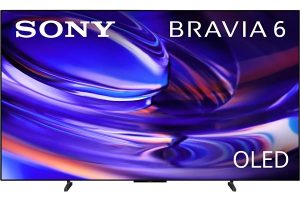
The Sony BRAVIA 6 is Sony’s entry-level OLED TV for 2026. Available in 48-, 55-, 65-, 77-, and 83-inch screen sizes in the US market, it is designed for buyers who want OLED picture quality without paying the premium associated with Sony’s higher-tier models.
One of the biggest advantages of the BRAVIA 6 is its OLED panel. Because each pixel produces its own light, the television can switch individual pixels off to display true blacks. This produces excellent contrast and helps dark scenes look detailed and cinematic, particularly when watching movies in a dimly lit room.
The BRAVIA 6 uses Sony’s Triluminos Pro color technology and a more straightforward picture-processing platform rather than the premium XR Processor found in the BRAVIA 8. It is designed to deliver enjoyable 4K entertainment while keeping OLED technology accessible to more buyers.
The BRAVIA 6 offers the benefits of OLED technology, including excellent contrast and pixel-level light control. However, it does not include the BRAVIA 8’s premium XR picture-processing features. Buyers comparing HDR performance should consult reliable measurements of both televisions, as peak brightness can vary depending on picture mode and testing conditions.
For gaming, however, the BRAVIA 6 has a notable advantage. It features four HDMI 2.1 ports, allowing users to connect multiple modern gaming devices without relying as heavily on an external HDMI switch. It also supports 4K at 120Hz and variable refresh rate (VRR), making it an attractive option for gamers with several consoles or a compatible PC.
Overall, the Sony BRAVIA 6 is a practical choice for buyers who want OLED’s deep blacks, a wide selection of screen sizes, and extensive gaming connectivity at a more accessible price. Its main compromises are the absence of Sony’s premium XR processing and Acoustic Surface Audio+ system.
| Sony BRAVIA 6 Prices | |
| 83-Inch (K-83A60) | Check Today’s Price (Amazon.com)… |
| 77-Inch (K-77A60) | Check Today’s Price (Amazon.com)… |
| 65-Inch (K-65A60) | Check Today’s Price (Amazon.com)… |
| 55-Inch (K-55A60) | Check Today’s Price (Amazon.com)… |
| 48-Inch (K-48A60) | Check Today’s Price (Amazon.com)… |
Sony BRAVIA 8 Short Overview
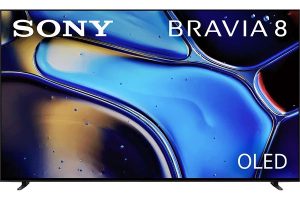
The Sony BRAVIA 8 is a premium OLED TV introduced in 2024. Available in 55-, 65-, and 77-inch screen sizes in the US market, it was designed to deliver a more sophisticated home-cinema experience through Sony’s advanced picture processing and distinctive audio technology.
Like the BRAVIA 6, the BRAVIA 8 uses an OLED panel that can turn individual pixels off to produce perfect blacks. This allows it to deliver excellent contrast, wide viewing angles, and detailed dark scenes. However, Sony equips the BRAVIA 8 with its XR Processor, which handles image processing, upscaling, color, and contrast enhancement.
The BRAVIA 8 offers Sony’s more premium picture-processing package, including XR Contrast Booster and XR Triluminos Pro. These technologies are designed to enhance perceived contrast and reproduce natural-looking colors. However, peak HDR brightness depends on picture mode, test conditions, and the size of the bright area on screen, so a direct numerical comparison should only be included when reliable measurements for both TVs are available.
Audio is another major advantage. The BRAVIA 8 features Acoustic Surface Audio+, which uses actuators behind the screen to produce sound from the display itself. This helps dialogue and sound effects appear to come directly from the action on screen. The television also supports Dolby Atmos and DTS:X, making it a compelling option for buyers who want an immersive viewing experience without immediately purchasing a separate soundbar.
The BRAVIA 8 does have a limitation for gaming connectivity. It provides two HDMI 2.1 ports, compared with four on the BRAVIA 6. This is sufficient for many setups, but gamers who use multiple consoles and a gaming PC may find the BRAVIA 6 more convenient.
Overall, the Sony BRAVIA 8 is the stronger premium entertainment option. Its premium XR picture processing and Acoustic Surface Audio+ system make it particularly appealing to movie enthusiasts who prioritize picture quality and immersive sound over having the newest model or the greatest number of HDMI 2.1 connections.
| Sony BRAVIA 8 Prices | |
| 77-inch (K-77XR80) | Check Today’s Price (Amazon.com)… |
| 65-inch (K-65XR80) | Check Today’s Price (Amazon.com)… |
| 55-inch (K-55XR80) | Check Today’s Price (Amazon.com)… |
Sony BRAVIA 6 vs BRAVIA 8 Specs Comparison
To better understand how these two OLED televisions compare, let’s look at their key specifications side by side. Both offer 4K OLED picture quality, but the BRAVIA 8 has the advantage in premium picture processing and built-in audio, while the BRAVIA 6 offers more HDMI 2.1 connections and additional screen sizes.
| Feature | Sony BRAVIA 6 | Sony BRAVIA 8 | ||||||||
| Model Year | 2026 | 2024 | ||||||||
| Display Type | OLED | OLED | ||||||||
| Resolution | 4K UHD (3840 × 2160) | 4K UHD (3840 × 2160) | ||||||||
| Screen Sizes | 48″, 55″, 65″, 77″, 83″ | 55″, 65″, 77″ | ||||||||
| Picture Processor | Standard 4K Video Processor | Sony XR Processor | ||||||||
| Color Technology | Triluminos Pro | XR Triluminos Pro | ||||||||
| Contrast Technology | OLED pixel-level lighting | OLED with XR Contrast Booster | ||||||||
| Motion Technology | 120Hz OLED panel | XR OLED Motion | ||||||||
| HDR Formats | HDR10, HLG, Dolby Vision | HDR10, HLG, Dolby Vision | ||||||||
| Operating System | Google TV | Google TV | ||||||||
| HDMI 2.1 Ports | 4 | 2 | ||||||||
| 4K at 120Hz | Yes | Yes | ||||||||
| Variable Refresh Rate | Yes | Yes | ||||||||
| Auto Low Latency Mode | Yes | Yes | ||||||||
| Built-In Audio | Conventional speaker system | Acoustic Surface Audio+ | ||||||||
| Dolby Atmos | Yes | Yes | ||||||||
| DTS:X | Yes | Yes | ||||||||
| Price | Lower | Higher | ||||||||
|
|
What Are the Differences Between Sony BRAVIA 6 and BRAVIA 8?
Although both televisions use OLED technology, Sony positions them at different levels of its lineup. The BRAVIA 8 is designed for buyers who want a more premium picture and audio experience, while the BRAVIA 6 focuses on providing OLED technology at a lower price. Here are the key differences between them.
1. HDR Picture Performance
The BRAVIA 8 offers Sony’s more premium picture-processing package, including XR Contrast Booster and XR Triluminos Pro. These technologies are designed to enhance perceived contrast and reproduce natural-looking colors.
This can make the BRAVIA 8 an attractive option for movie enthusiasts who prioritize HDR picture quality. However, peak brightness depends on picture mode, testing conditions, and the size of the bright area on screen. A numerical brightness comparison should only be included when reliable, comparable measurements for both televisions are available.
The BRAVIA 6 still benefits from OLED’s excellent contrast and pixel-level light control. Rather than relying on unverified brightness estimates, buyers should compare independent measurements if HDR brightness is a deciding factor.
2. Picture Processing
The BRAVIA 8 has another significant advantage in Sony’s XR Processor. This processing platform is designed to analyze and enhance image detail, contrast, color, and motion, helping content look more natural and refined.
The BRAVIA 8 also features XR Contrast Booster and XR Triluminos Pro, which contribute to its premium picture-processing package. These technologies are particularly useful for movie enthusiasts who watch a mixture of high-quality 4K content and lower-resolution sources that require upscaling.
The BRAVIA 6 uses the Standard 4K Video Processor and Triluminos Pro instead. This more cost-conscious approach allows Sony to offer OLED technology at a lower price, but it does not include the same XR processing features found in the BRAVIA 8.
For buyers who prioritize image processing and the refinement of everyday content, the BRAVIA 8 is the more premium option.
3. Built-In Audio
The Sony BRAVIA 8 stands out with its Acoustic Surface Audio+ system. Rather than relying exclusively on conventional speakers, it uses actuators behind the screen to produce sound directly from the display.
This design helps dialogue and sound effects feel more closely connected to the on-screen action. When watching movies, it can create a more cohesive audiovisual experience without requiring an external soundbar.
The BRAVIA 6 uses a conventional speaker system to keep costs down. While it supports immersive audio formats such as Dolby Atmos and DTS:X, format support alone does not guarantee the same sound quality or spatial presentation as the BRAVIA 8.
If you want better-integrated built-in audio and a more cinematic experience without immediately purchasing a separate sound system, the BRAVIA 8 is the more attractive choice.
4. HDMI 2.1 Ports
Interestingly, the less expensive BRAVIA 6 has an advantage when it comes to gaming connectivity. It offers four HDMI 2.1 ports, while the BRAVIA 8 provides two HDMI 2.1 ports.
This matters if you own several gaming devices, such as a PlayStation 5, Xbox Series X, and gaming PC. With four HDMI 2.1 connections, the BRAVIA 6 provides greater flexibility for connecting multiple devices that benefit from high-bandwidth gaming features.
The BRAVIA 8 remains a capable gaming television with support for 4K at 120Hz and variable refresh rate. However, users with several HDMI 2.1 devices may need to switch cables or use a compatible HDMI switch.
Therefore, the BRAVIA 6 can actually be the more convenient option for gaming setups with multiple high-bandwidth sources.
5. Screen Size Selection
The BRAVIA 6 is available in five screen sizes, ranging from 48 to 83 inches. The BRAVIA 8 comes in 55-, 65-, and 77-inch versions.
This gives the BRAVIA 6 an advantage for buyers who need a smaller OLED TV for a bedroom or compact living room. Its 48-inch option is particularly useful for those who cannot comfortably accommodate a 55-inch television.
At the other end of the range, the BRAVIA 6 also offers an 83-inch version, providing a larger-screen option for buyers who want a more immersive viewing experience.
The BRAVIA 8 remains available in the popular 55-, 65-, and 77-inch sizes, but its narrower selection gives buyers fewer options when matching a television to their room and budget.
6. Model Year
The BRAVIA 6 is the newer television, having been introduced in 2026, while the BRAVIA 8 was introduced in 2024. However, their positions in Sony’s lineup are not determined by release year alone.
Sony designed the BRAVIA 6 to make OLED more accessible, which means it uses a more cost-conscious processor and conventional speakers. The BRAVIA 8 occupies a higher product tier thanks to its XR Processor, premium XR picture-processing features, and Acoustic Surface Audio+ system.
Consequently, the newer BRAVIA 6 should not automatically be considered the better television. Buyers who value premium picture processing and built-in audio may prefer the older BRAVIA 8, particularly if the price difference is reasonable.
7. Price and Overall Value
The Sony BRAVIA 6 is intended to offer a more affordable route into OLED entertainment. It provides deep blacks, excellent contrast, 4K resolution, modern gaming support, and four HDMI 2.1 ports without requiring buyers to pay for Sony’s premium XR processing and screen-based audio.
The BRAVIA 8 is the more premium alternative because it offers a more advanced feature package. Its premium XR picture-processing features and Acoustic Surface Audio+ system make it particularly attractive to buyers who prioritize cinematic performance.
However, the BRAVIA 8 was released in 2024, so its current retail price may be substantially lower than its original launch price. If retailers offer it at a substantial discount, it could represent better overall value than the newer BRAVIA 6.
Before making a decision, compare both televisions at the same screen size. If the price difference is relatively small, the BRAVIA 8’s premium features make it the more compelling purchase for movie enthusiasts. If you want to save money or need four HDMI 2.1 ports, the BRAVIA 6 may be the better fit.
Which OLED TV Is the Better Choice?
The Sony BRAVIA 6 is the better choice for buyers who want to enjoy 4K OLED picture quality at a more affordable price. It delivers deep blacks, excellent contrast, and vibrant colors while offering a wider selection of screen sizes, from 48 to 83 inches. Its four HDMI 2.1 ports are another significant advantage, particularly for gamers who want to connect multiple consoles or a gaming PC. Although it lacks the BRAVIA 8’s premium XR picture-processing package and Acoustic Surface Audio+ system, the BRAVIA 6 remains an attractive option for everyday entertainment and gaming. If you want a newer Sony OLED TV without paying extra for premium features you may not need, the BRAVIA 6 is a sensible value-oriented choice.
| Sony BRAVIA 6 Prices | |
| 83-Inch (K-83A60) | Check Today’s Price (Amazon.com)… |
| 77-Inch (K-77A60) | Check Today’s Price (Amazon.com)… |
| 65-Inch (K-65A60) | Check Today’s Price (Amazon.com)… |
| 55-Inch (K-55A60) | Check Today’s Price (Amazon.com)… |
| 48-Inch (K-48A60) | Check Today’s Price (Amazon.com)… |
The Sony BRAVIA 8 is the better choice for buyers who prioritize premium picture quality and a more immersive home-cinema experience. Its XR Processor, XR Contrast Booster, and XR Triluminos Pro provide a more advanced picture-processing package. The Acoustic Surface Audio+ system is another major advantage, producing sound directly from the screen for a more integrated viewing experience. Although it is an older model and offers fewer high-bandwidth gaming connections, the BRAVIA 8 remains the more premium option for movie enthusiasts who value sophisticated image processing and distinctive built-in audio. If its current retail price fits your budget, the BRAVIA 8 is the stronger choice for a premium OLED viewing experience.
| Sony BRAVIA 8 Prices | |
| 77-inch (K-77XR80) | Check Today’s Price (Amazon.com)… |
| 65-inch (K-65XR80) | Check Today’s Price (Amazon.com)… |
| 55-inch (K-55XR80) | Check Today’s Price (Amazon.com)… |