The TCL QM7L and TCL QM7K are two of the most attractive Mini-LED TVs in TCL’s premium lineup. While the QM7K established itself as one of the best-value Mini-LED TVs of 2025, the newer QM7L arrives as TCL’s 2026 successor with several meaningful upgrades designed to improve picture quality, color performance, and overall viewing experience.
At first glance, both TVs appear very similar. They share a 4K resolution, Mini-LED backlighting, a native 144Hz refresh rate, Google TV, and extensive gaming features. However, the QM7L introduces TCL’s latest SQD-Mini LED technology, a new TSR AI Processor, an upgraded HVA 2.0 Pro panel, and significantly enhanced color performance with 100% BT.2020 color coverage. These improvements make the QM7L more than just a minor refresh.
In this article, we’ll take a closer look at the key differences between the TCL QM7L and TCL QM7K, focusing on the upgrades TCL introduced with the newer model. Understanding these changes can help you decide whether the QM7L’s newer technology is worth the additional investment or if the QM7K still offers the better value for your needs.
TCL QM7L (2026) Short Overview
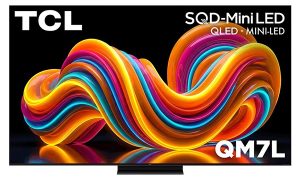
The TCL QM7L is TCL’s premium upper-midrange Mini-LED TV for 2026. It builds upon the success of the QM7K by introducing a new generation of display technology aimed at delivering richer colors, better contrast control, and more intelligent image processing.
One of the biggest upgrades is TCL’s new SQD-Mini LED technology. Unlike the Quantum Dot Mini-LED system used in the QM7K, the QM7L employs TCL’s latest Super Quantum Dot (SQD) technology, which allows it to achieve 100% BT.2020 color coverage. This results in more accurate colors and greater color volume, particularly when displaying HDR content.
The QM7L is also equipped with TCL’s HVA 2.0 Pro Panel, which is designed to further improve contrast performance while maintaining excellent brightness. Combined with up to 2,100+ local dimming zones and up to 3,000 nits of peak brightness, the TV delivers impressive HDR performance with deep blacks and bright highlights.
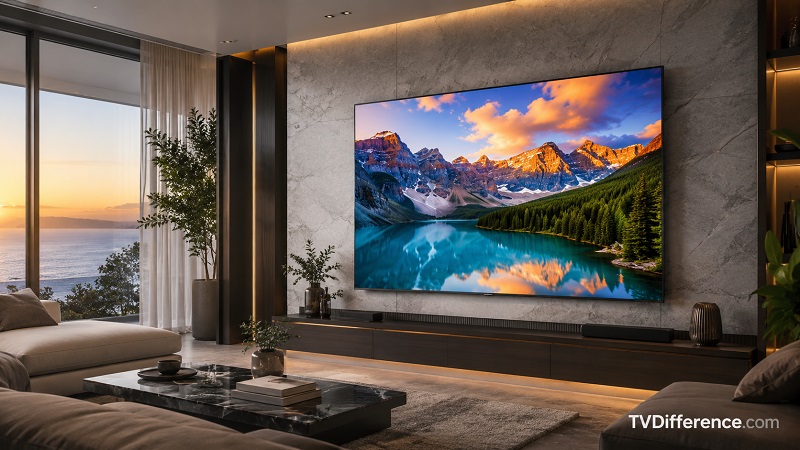
For gamers, the QM7L remains extremely capable. It supports 4K at 144Hz, VRR, ALLM, FreeSync Premium Pro, and TCL’s Game Accelerator 288, providing smooth gameplay and low input lag. It also includes advanced gaming tools through the integrated Game Bar.
Running on Google TV, the QM7L offers access to thousands of streaming apps while supporting Dolby Vision IQ, HDR10+, IMAX Enhanced certification, Dolby Atmos, and hands-free voice control. Overall, the QM7L represents TCL’s most refined QM7-series TV to date.
| TCL QM7L Prices | |
| 98-inch (98QM7L) | Check Today’s Price (Amazon.com)… |
| 85-inch (85QM7L) | Check Today’s Price (Amazon.com)… |
| 75-inch (75QM7L) | Check Today’s Price (Amazon.com)… |
| 65-inch (65QM7L) | Check Today’s Price (Amazon.com)… |
| 55-inch (55QM7L) | Check Today’s Price (Amazon.com)… |
TCL QM7K (2025) Short Overview
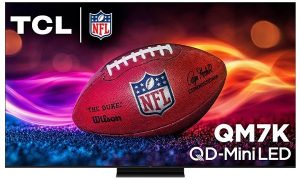
The TCL QM7K remains one of the strongest Mini-LED TVs in its class and was widely praised for delivering premium-level performance at a competitive price. It sits below the flagship QM8K while offering many of the same core technologies.
The TV uses TCL’s QD-Mini LED technology combined with a CrystGlow HVA Panel and Precise Dimming L2 local dimming system. Depending on screen size, it can offer thousands of local dimming zones and reach peak brightness levels approaching 3,000 nits, making it highly effective for HDR content.
Color performance is another strength of the QM7K. Its Quantum Dot technology enables a wide color gamut and vibrant HDR presentation. While it doesn’t reach the BT.2020 coverage claimed by the QM7L, it still delivers excellent color reproduction for movies, sports, and gaming.
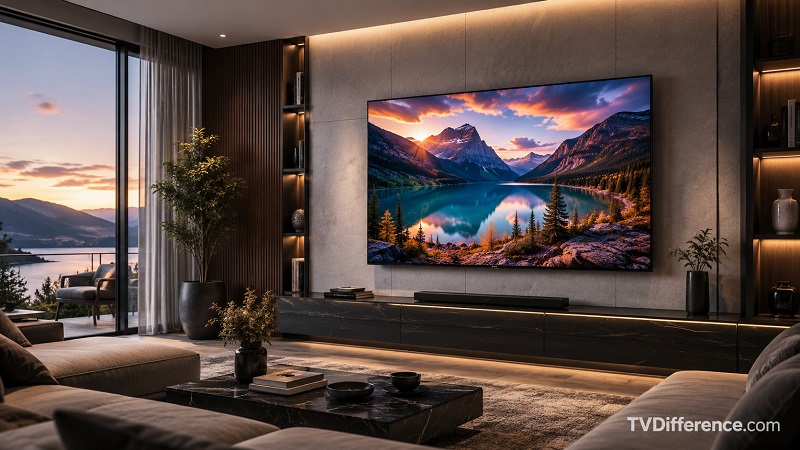
Gaming features are virtually flagship-class. The QM7K supports 4K 144Hz, VRR, ALLM, FreeSync Premium Pro, and TCL’s gaming enhancements, making it a great choice for PlayStation 5, Xbox Series X, and gaming PCs.
Like the QM7L, the QM7K runs Google TV and supports Dolby Vision IQ, HDR10+, Dolby Atmos, Chromecast, AirPlay 2, and multiple smart-home ecosystems. Even after the arrival of the QM7L, the QM7K continues to offer tremendous value for buyers seeking premium Mini-LED performance.
| TCL QM7K Prices | |
| 115-inch (115QM7K) | Check Today’s Price (Amazon.com)… |
| 98-inch (98QM7K) | Check Today’s Price (Amazon.com)… |
| 85-inch (85QM7K) | Check Today’s Price (Amazon.com)… |
| 75-inch (75QM7K) | Check Today’s Price (Amazon.com)… |
| 65-inch (65QM7K) | Check Today’s Price (Amazon.com)… |
| 55-inch (55QM7K) | Check Today’s Price (Amazon.com)… |
TCL QM7L vs QM7K Specifications
Here’s a quick look at how these two TVs compare:
| Feature | TCL QM7L (2026) | TCL QM7K (2025) | |||||||||||
| Release Year | 2026 | 2025 | |||||||||||
| Display Technology | SQD-Mini LED | QD-Mini LED | |||||||||||
| Panel Type | HVA 2.0 Pro Panel | CrystGlow HVA Panel | |||||||||||
| Resolution | 4K UHD (3840 × 2160) | 4K UHD (3840 × 2160) | |||||||||||
| Refresh Rate | 144Hz | 144Hz | |||||||||||
| Peak Brightness | Up to 3,000 Nits | Up to 3,000 Nits | |||||||||||
| Local Dimming Zones | 2,000+ Zones (size dependent) | 2,000+ Zones (size dependent) | |||||||||||
| Color Gamut | 100% BT.2020 | Wide Quantum Dot Color | |||||||||||
| Processor | TSR AI Processor | AiPQ Ultra Processor | |||||||||||
| HDR Support | Dolby Vision IQ, HDR10+, HDR10, HLG | Dolby Vision IQ, HDR10+, HDR10, HLG | |||||||||||
| IMAX Enhanced | Yes | Not Listed | |||||||||||
| Gaming Features | VRR, ALLM, FreeSync Premium Pro, Game Accelerator 288 | VRR, ALLM, FreeSync Premium Pro, Game Accelerator 288 | |||||||||||
| Audio | Bang & Olufsen Audio | Bang & Olufsen Audio | |||||||||||
| Smart Platform | Google TV | Google TV | |||||||||||
| Wi-Fi | Wi-Fi 5 | Wi-Fi 5 | |||||||||||
| Bluetooth | Bluetooth 5.4 | Bluetooth 5.0 | |||||||||||
| HDMI | 4 HDMI | 4 HDMI | |||||||||||
| Price | Higher | Lower | |||||||||||
|
|
The Differences Between TCL QM7L and QM7K
Although both TVs share many core features such as Mini-LED backlighting, a 144Hz refresh rate, Google TV, and extensive gaming support, TCL introduced several meaningful upgrades with the newer QM7L.
1. SQD-Mini LED vs QD-Mini LED
The most significant upgrade found in the QM7L is TCL’s new SQD-Mini LED technology. While the QM7K already uses Quantum Dot Mini-LED technology, the QM7L incorporates TCL’s latest Super Quantum Dot system, which is designed to deliver improved color purity and greater color volume.
This enhancement allows the QM7L to reproduce more vibrant colors while maintaining better accuracy across a wider brightness range. HDR content, in particular, benefits from richer and more lifelike color reproduction.
2. 100% BT.2020 Color Coverage
Another major improvement is the QM7L’s ability to cover up to 100% of the BT.2020 color space. This is one of the widest color gamuts currently available in consumer televisions.
While the QM7K already offers excellent color performance thanks to its Quantum Dot layer, TCL specifically highlights the QM7L’s expanded color capability as one of its key upgrades. As a result, movies, games, and HDR content can appear more realistic and immersive.
3. HVA 2.0 Pro Panel
The QM7L introduces TCL’s newer HVA 2.0 Pro Panel, replacing the CrystGlow HVA panel used by the QM7K.
Although both panels are designed to provide excellent native contrast, the newer panel generation is paired with TCL’s updated backlight management and image processing systems. This helps improve black-level performance, shadow detail, and overall contrast precision.
For viewers who frequently watch movies in dark rooms, this can translate into a cleaner and more refined image.
4. TSR AI Processor vs AiPQ Ultra Processor
The QM7L is powered by TCL’s new TSR AI Processor, while the QM7K relies on the company’s AiPQ Ultra Processor.
Both processors are highly capable, but the newer TSR AI Processor is designed to deliver improved scene recognition, image optimization, motion processing, and upscaling performance. Lower-resolution content should appear cleaner, while fast-moving scenes can benefit from improved detail retention.
This gives the QM7L an advantage when watching broadcast TV, sports, and older streaming content.
5. Updated Local Dimming and Picture Processing
Although both TVs can reach similar peak brightness levels of up to 3,000 nits, TCL has refined the local dimming algorithms used in the QM7L.
The newer processing system works together with the HVA 2.0 Pro panel and SQD-Mini LED backlight to improve contrast control and reduce blooming around bright objects. As a result, HDR content can appear more natural and better balanced than on the previous-generation QM7K.
6. IMAX Enhanced Certification
The QM7L adds IMAX Enhanced certification, a feature not listed for the QM7K.
This certification ensures compatibility with IMAX Enhanced content and gives users access to specially optimized picture and audio settings when watching supported movies and streaming content. While not a major upgrade for every user, it is another enhancement that helps position the QM7L as TCL’s more premium offering.
7. Value for Money
This is where the QM7K fights back.
As newer models arrive, the QM7K is likely to receive substantial discounts. Buyers may find that the performance gap between the two TVs is smaller than the price difference.
If pricing becomes significantly lower, the QM7K could offer better overall value despite lacking some of the QM7L’s newest technologies.
What is The Reason to Choose TCL QM7L?
The biggest reason to choose the TCL QM7L is its collection of next-generation upgrades. TCL enhanced the QM7L with SQD-Mini LED technology, 100% BT.2020 color coverage, a new HVA 2.0 Pro Panel, the latest TSR AI Processor, improved local dimming algorithms, and IMAX Enhanced certification. While the QM7K already delivers excellent Mini-LED performance, these improvements allow the QM7L to produce richer colors, cleaner HDR highlights, more refined contrast, and better overall picture processing. If you’re looking for the most advanced picture quality TCL currently offers in the QM7 series and want a TV that’s better equipped for future HDR content, the TCL QM7L is the model we recommend.
| TCL QM7L Prices | |
| 98-inch (98QM7L) | Check Today’s Price (Amazon.com)… |
| 85-inch (85QM7L) | Check Today’s Price (Amazon.com)… |
| 75-inch (75QM7L) | Check Today’s Price (Amazon.com)… |
| 65-inch (65QM7L) | Check Today’s Price (Amazon.com)… |
| 55-inch (55QM7L) | Check Today’s Price (Amazon.com)… |
That said, the TCL QM7K remains an outstanding TV and may ultimately be the better choice for value-conscious buyers. It still offers impressive Mini-LED brightness, excellent contrast, a 144Hz panel, premium gaming features, and the same Google TV platform that makes the QM7L so appealing. Since many of the QM7L’s improvements are refinements rather than dramatic changes, the QM7K can be the smarter purchase when available at a significantly lower price. If your goal is to maximize performance per dollar, the TCL QM7K continues to be one of the best Mini-LED TV values available.
| TCL QM7K Prices | |
| 115-inch (115QM7K) | Check Today’s Price (Amazon.com)… |
| 98-inch (98QM7K) | Check Today’s Price (Amazon.com)… |
| 85-inch (85QM7K) | Check Today’s Price (Amazon.com)… |
| 75-inch (75QM7K) | Check Today’s Price (Amazon.com)… |
| 65-inch (65QM7K) | Check Today’s Price (Amazon.com)… |
| 55-inch (55QM7K) | Check Today’s Price (Amazon.com)… |