Samsung’s 2026 TV lineup includes a growing selection of Mini-LED models designed to serve different budgets and viewing needs. Two notable options are the Samsung QN80H and Samsung M80H. The QN80H sits above the Samsung QN70H in Samsung’s Neo QLED lineup, while the M80H is positioned above the Samsung M70H in the company’s more affordable Mini-LED series. Despite targeting different price segments, the QN80H and M80H share several core technologies, including the NQ4 AI Gen2 Processor, 4K resolution with up to 144Hz refresh rate support, Samsung’s latest Tizen OS, and a comprehensive suite of gaming and smart TV features. At first glance, these similarities make the two TVs appear surprisingly close on paper.
However, these two TVs are designed for different audiences. The Samsung QN80H is part of Samsung’s premium Neo QLED lineup and uses Quantum Mini LED technology combined with Quantum Dot technology to deliver superior brightness, color volume, and HDR performance. The Samsung M80H, meanwhile, is positioned as a more affordable Mini-LED alternative that retains many modern features but makes several compromises to achieve its lower price point.
So, what exactly is better in the Samsung QN80H, and why should you choose it over the M80H? Let’s take a closer look.
Samsung QN80H (2026) Short Overview
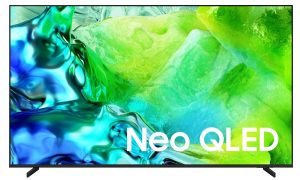
The Samsung QN80H is one of Samsung’s premium 4K Neo QLED TVs for 2026. It sits above Samsung’s entry-level Neo QLED models, including the QN70H, and is designed to provide a more cinematic viewing experience with brighter HDR highlights, richer colors, and improved contrast control.
Its biggest advantage comes from Samsung’s Quantum Mini LED backlight system, which works together with Quantum Dot technology to produce more accurate colors and higher brightness levels than conventional Mini-LED televisions. Combined with NQ HDR+, Supreme Mini LED Dimming, and Real Depth Enhancer, the QN80H is capable of delivering impressive HDR performance in both dark and bright rooms.
Powering the TV is Samsung’s NQ4 AI Gen2 Processor, which handles AI-enhanced upscaling, motion processing, HDR optimization, and scene analysis. The TV also supports advanced gaming features such as 4K 144Hz, FreeSync Premium Pro, Game Bar, AI Auto Game Mode, and Super Ultra Wide Game View.
Audio performance is also more advanced than many competing models thanks to Dolby Atmos, Object Tracking Sound Lite, Q-Symphony, and a more powerful 30W speaker system.
Overall, the Samsung QN80H is designed for buyers who want premium picture quality, strong gaming performance, and a more complete home theater experience.
| Samsung QN80H Prices | |
| 100-inch (QN100QN80HFXZA) | Check Today’s Price (Amazon.com)… |
| 85-inch (QN85QN80HAFXZA) | Check Today’s Price (Amazon.com)… |
| 75-inch (QN75QN80HAFXZA) | Check Today’s Price (Amazon.com)… |
| 65-inch (QN65QN80HAFXZA) | Check Today’s Price (Amazon.com)… |
| 55-inch (QN55QN80HAFXZA) | Check Today’s Price (Amazon.com)… |
Samsung M80H (2026) Short Overview
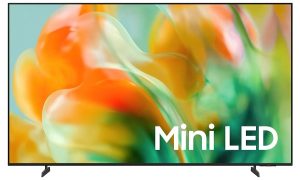
The Samsung M80H is a more affordable 4K Mini-LED TV that borrows many features from Samsung’s higher-end models while reducing costs in key areas.
Like the QN80H, it uses a Mini-LED backlight, supports 4K resolution at 144Hz, and runs on the same NQ4 AI Gen2 Processor. This means users still get excellent smart TV performance, modern gaming features, and Samsung’s latest AI-powered picture enhancements.
The M80H also includes Mini LED HDR, Supreme Mini LED Dimming, Real Depth Enhancer, and Samsung’s latest gaming features such as VRR, ALLM, FreeSync Premium, Game Bar, and Gaming Hub.
Where Samsung reduces costs is primarily in the display technology, audio system, connectivity options, and overall hardware package. Unlike the QN80H, the M80H does not use Quantum Dot technology, comes with a less powerful speaker system, fewer HDMI and USB ports, and slower wireless connectivity.
As a result, the Samsung M80H is best suited for buyers looking for a budget-friendly Mini-LED TV while still enjoying many premium Samsung features.
| Samsung M80H Prices | |
| 85-inch (UN85M80HAFXZA) | Check Today’s Price (Amazon.com)… |
| 75-inch (UN75M80HAFXZA) | Check Today’s Price (Amazon.com)… |
| 65-inch (UN65M80HAFXZA) | Check Today’s Price (Amazon.com)… |
| 55-inch (UN55M80HAFXZA) | Check Today’s Price (Amazon.com)… |
Samsung QN80H and M80H Specs Comparison Table
Before we discuss the differences in detail, let’s compare their main specifications side by side.
| Feature | Samsung QN80H | Samsung M80H | |||||||||
| Product Type | Neo QLED | LED | |||||||||
| Backlight Technology | Quantum Mini LED | Mini LED | |||||||||
| Quantum Dot Technology | Yes | No | |||||||||
| Processor | NQ4 AI Gen2 Processor | NQ4 AI Gen2 Processor | |||||||||
| Resolution | 4K UHD | 4K UHD | |||||||||
| Refresh Rate | 144Hz (VRR) | 144Hz (VRR) | |||||||||
| HDR Format | NQ HDR+ | Mini LED HDR | |||||||||
| HDR10+ | Yes | Yes | |||||||||
| Local Dimming | Supreme Mini LED Dimming | Supreme Mini LED Dimming | |||||||||
| Contrast Enhancer | Real Depth Enhancer | Real Depth Enhancer | |||||||||
| Audio Output | 30W | 20W | |||||||||
| Dolby Atmos | Yes | No | |||||||||
| Object Tracking Sound | OTS Lite | OTS Lite | |||||||||
| Q-Symphony | Yes | Yes | |||||||||
| Active Voice Amplifier | Active Voice Amplifier Pro | Active Voice Amplifier | |||||||||
| FreeSync | Premium Pro | Premium | |||||||||
| HDMI Ports | 4 | 3 | |||||||||
| USB Ports | 2 | 1 | |||||||||
| Wi-Fi | Wi-Fi 6E | Wi-Fi 5 | |||||||||
| Bluetooth | 5.3 | 5.3 | |||||||||
| Ethernet | Yes | Yes | |||||||||
| HDMI Input Support | 4K 144Hz on all HDMI ports | 4K 144Hz on all HDMI ports | |||||||||
| Operating System | Tizen OS | Tizen OS | |||||||||
| Price | Higher | Lower | |||||||||
|
|
The Differences Between Samsung QN80H and M80H
Although both TVs share several core technologies, the QN80H offers meaningful upgrades in multiple areas.
1. Neo QLED vs Standard Mini-LED
The biggest difference between these TVs is their display technology.
The Samsung QN80H combines Quantum Mini LED backlighting with Quantum Dot technology, making it a true Neo QLED TV. Quantum Dot technology allows the TV to produce a wider color gamut, higher color volume, and more vibrant HDR images.
The Samsung M80H uses a Mini-LED backlight but lacks Quantum Dot technology. While it can still produce an impressive image for its price, it cannot match the color richness and HDR impact of the QN80H.
This is arguably the most important advantage of the QN80H.
2. Better HDR Performance
The QN80H comes with NQ HDR+, while the M80H uses the simpler Mini LED HDR implementation.
Combined with the Quantum Dot technology, the QN80H is designed to deliver higher brightness and more vibrant HDR highlights than the M80H. HDR movies, sports broadcasts, and games benefit significantly from the improved brightness and color reproduction.
If you frequently watch HDR content from Netflix, Disney+, Prime Video, or UHD Blu-ray discs, the QN80H provides a more premium viewing experience.
3. Superior Audio System
Audio is another area where the QN80H clearly pulls ahead.
The QN80H includes:
- 30W audio output
- Dolby Atmos support
- Object Tracking Sound Lite
- Q-Symphony
- Active Voice Amplifier Pro
The M80H includes:
- 20W audio output
- Object Tracking Sound Lite
- Q-Symphony
- Standard Active Voice Amplifier
The addition of Dolby Atmos and the more powerful speaker system helps the QN80H create a larger and more immersive soundstage.
If you do not plan to use a soundbar immediately, the QN80H provides a much better built-in audio experience.
4. Better Gaming Performance
Both TVs are excellent gaming TVs with:
- 4K 144Hz support
- VRR
- ALLM
- Game Bar
- Gaming Hub
- AI Auto Game Mode
However, the QN80H includes FreeSync Premium Pro, while the M80H is limited to FreeSync Premium.
FreeSync Premium Pro adds HDR-aware variable refresh rate support, helping maintain smoother HDR gaming with compatible PCs and gaming consoles.
For serious gamers, the QN80H has the advantage.
5. More Connectivity Options
The QN80H offers a more flexible connectivity package.
Samsung QN80H:
- 4 HDMI ports
- 2 USB ports
- Wi-Fi 6E
Samsung M80H:
- 3 HDMI ports
- 1 USB port
- Wi-Fi 5
The additional HDMI port alone can be valuable if you connect multiple gaming consoles, streaming devices, and audio equipment simultaneously.
The inclusion of Wi-Fi 6E also provides better wireless performance and future-proofing.
6. Premium Design
Samsung positions the QN80H above the M80H in its lineup, and that is reflected in its design.
The QN80H uses Samsung’s Monolith Edge design, giving it a more premium appearance with a thinner profile and more refined overall construction.
The M80H’s Metal Stream design still looks attractive but is clearly designed with affordability in mind.
7. Price
The Samsung M80H is expected to be more affordable than the Samsung QN80H. While both TVs share the same NQ4 AI Gen2 Processor, 4K 144Hz support, Tizen OS, and many gaming features, Samsung reduces the M80H’s price by removing the Quantum Dot technology, simplifying the audio system, reducing connectivity options, and using less premium hardware overall.
If your primary goal is getting a Mini-LED TV with modern gaming and smart TV features at the lowest possible cost, the M80H offers excellent value. However, if you are willing to spend more for noticeably better picture quality, HDR performance, audio, and connectivity, the QN80H is the stronger long-term investment.
Why Should You Choose Samsung QN80H?
The Samsung QN80H is the better choice for most people because it delivers a noticeably more premium viewing experience while retaining all of the modern features that make Samsung’s 2026 TVs attractive. Its Neo QLED display with Quantum Dot technology produces richer colors, higher brightness, and more impactful HDR performance than the M80H’s standard Mini-LED panel. The QN80H also comes with additional premium features such as Dolby Atmos, a more powerful 30W audio system, FreeSync Premium Pro, Wi-Fi 6E, and extra HDMI and USB ports. If you watch a lot of HDR movies, sports, or play games on a PS5, Xbox Series X, or gaming PC, the QN80H provides a more immersive and future-proof entertainment experience that justifies its higher price.
| Samsung QN80H Prices | |
| 100-inch (QN100QN80HFXZA) | Check Today’s Price (Amazon.com)… |
| 85-inch (QN85QN80HAFXZA) | Check Today’s Price (Amazon.com)… |
| 75-inch (QN75QN80HAFXZA) | Check Today’s Price (Amazon.com)… |
| 65-inch (QN65QN80HAFXZA) | Check Today’s Price (Amazon.com)… |
| 55-inch (QN55QN80HAFXZA) | Check Today’s Price (Amazon.com)… |
That said, the Samsung M80H remains an excellent option for buyers who are working with a tighter budget. It still offers Mini-LED contrast, the same NQ4 AI Gen2 Processor, 4K 144Hz gaming support, Samsung’s latest Tizen OS, and a comprehensive set of smart and gaming features. While it can’t match the QN80H’s color volume, HDR performance, audio quality, or connectivity options, it delivers much of the same core experience at a more affordable price. If value is your top priority and you’re willing to accept a few compromises, the Samsung M80H is still a very compelling TV for the money.
| Samsung M80H Prices | |
| 85-inch (UN85M80HAFXZA) | Check Today’s Price (Amazon.com)… |
| 75-inch (UN75M80HAFXZA) | Check Today’s Price (Amazon.com)… |
| 65-inch (UN65M80HAFXZA) | Check Today’s Price (Amazon.com)… |
| 55-inch (UN55M80HAFXZA) | Check Today’s Price (Amazon.com)… |